




Why Winter Is the Worst Season for Your Wardrobe (And What to Do About It)
by Kath P on Aug 06, 2026
Every winter, the same thing happens in homes across Australia.
The temperature drops. Windows close. Heaters go on. And somewhere in the back of your wardrobe, quietly and invisibly, moisture starts to build.
By the time you notice — a faint smell, a white bloom on a leather bag, clothes that smell stale minutes after washing — it's already been happening for weeks.
Winter is Australia's peak moisture season. And your wardrobe is ground zero.
WHY WINTER CREATES A MOISTURE PROBLEM
Most people associate moisture problems with tropical humidity or coastal locations. But winter creates its own unique moisture conditions — and they affect every Australian home, regardless of where you live.
Here's what happens.
When you heat the inside of your home, you create warm, moist air. That warm air rises and circulates — and when it makes contact with cold surfaces (windows, walls, the inside of a wardrobe that sits against an exterior wall), it releases its moisture. This process is called condensation, and it's why your windows fog up on cold mornings.
But unlike your windows, your wardrobe doesn't show you the moisture. It absorbs it.
The timber shelving, the fabric of your clothes, your leather bags and shoes, the walls of the wardrobe itself — all of them quietly soak up the moisture that the winter air deposits. Over weeks and months, that accumulated moisture creates the conditions for mould growth, musty odours, and material degradation.
Your clothes can start to smell musty within 24 hours of hanging in a high-moisture wardrobe. Leather can develop mould bloom within two to three weeks of sustained damp. Timber shelving warps slowly over a full winter. By September, you're wondering why your wardrobe never quite smells right — and the answer is six months of accumulated moisture.
THE SPECIFIC THINGS WINTER DOES TO YOUR WARDROBE
Understanding the mechanism helps you fix it. Here's what's actually happening inside a closed wardrobe in winter.
Sealed air. In summer, wardrobes often get incidental ventilation — from open windows, moving through rooms, doors being left open. In winter, homes are sealed tight. Less air movement means less moisture escape. Whatever moisture enters your wardrobe largely stays there.
Thermal differential. If your wardrobe sits against an exterior wall (as most do), the back wall of the wardrobe is significantly colder than the room. Warm moist air from the room enters the wardrobe and hits that cold back wall — releasing moisture directly onto the surface that's closest to your clothes.
Heavy fabric. Winter clothing — wool, cashmere, padded jackets, thick denim — holds more moisture than summer clothing. When you hang up a sweater at the end of a cool day, it brings body moisture and ambient humidity directly into the wardrobe environment.
Low light and airflow. Wardrobes are dark and enclosed by design. Mould spores thrive in exactly these conditions — and they're always present in the air. Give them a damp surface and they colonise within 24 to 48 hours.
WHAT HAPPENS IF YOU IGNORE IT
Winter moisture damage is cumulative. Each week of elevated moisture in your wardrobe adds to the problem rather than resetting it. Here's the typical progression:
Weeks 1–3: Moisture levels rise. No visible change yet. A faint mustiness may begin to develop on clothes that have been hanging for a while.
Month 1–2: The musty smell becomes more noticeable. Clothes may start to smell slightly stale even after washing. Leather goods may begin to show early-stage bloom (a white dusty coating).
Month 2–3: Mould may become visible in corners, on the back wall of the wardrobe, or on items stored in sealed boxes. The smell is now persistent.
Month 3+: Structural damage to timber is possible. Leather goods may be permanently marked. Wool and natural fibre clothing can develop mould that is difficult or impossible to fully remove.
None of this is inevitable. All of it is preventable.
HOW TO PROTECT YOUR WARDROBE THIS WINTER
The solution is straightforward: reduce the moisture in your wardrobe's air before it has the chance to settle on your belongings.
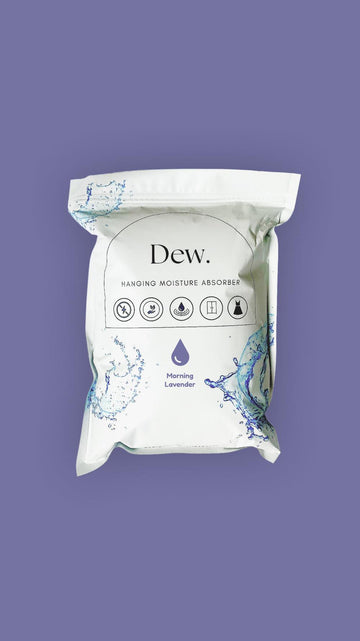
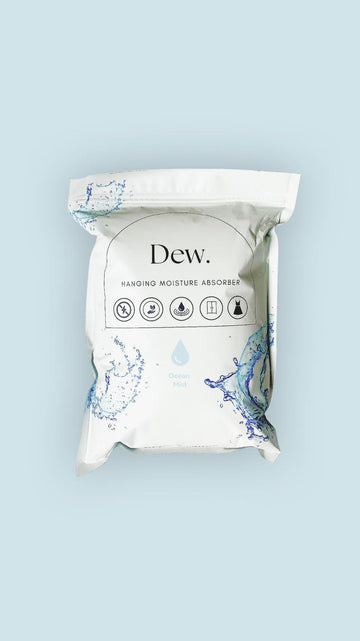
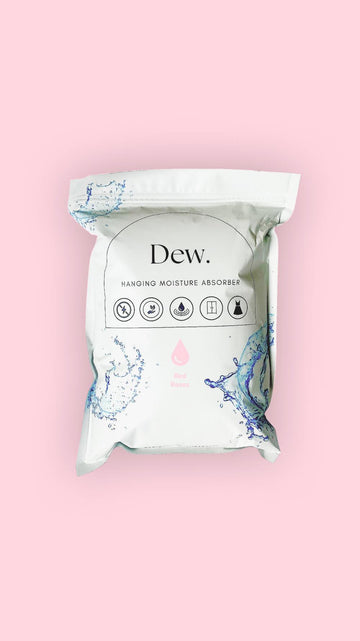
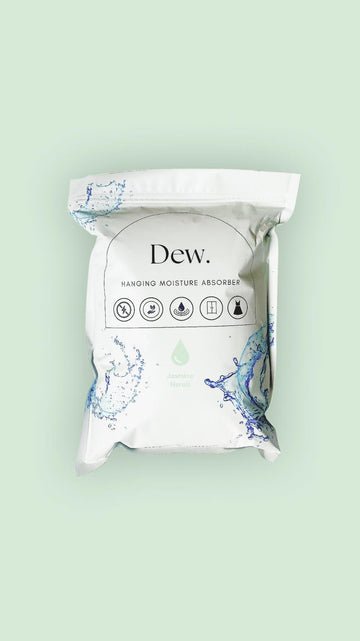
A hanging moisture absorber like Dew is the most practical way to do this. Placed on the clothing rail inside your wardrobe, it passively draws moisture from the surrounding air — without electricity, without maintenance, and without any disruption to how you use your wardrobe.
Here's what to do right now.
Place a Dew absorber on your wardrobe rail — one per wardrobe section is ideal for a large built-in, or one per standalone wardrobe. Position it towards the back where the cold wall is closest.
Check it every three to four weeks. In winter, absorbers fill faster than in other seasons because there's more moisture in the air to absorb. Most customers find their Dew fills noticeably faster in June and July than in December.
Don't hang clothes that are still warm or slightly damp. Let your clothes cool to room temperature before returning them to the wardrobe. Moisture evaporates from warm fabric and goes straight into the wardrobe air.
Leave a small gap between hanging items if possible. Dense packing reduces airflow and allows moisture to concentrate between garments.
THE WINTER WARDROBE CHECKLIST
Use this at the start of each winter season:
✓ Place a Dew hanging absorber in every wardrobe and built-in robe
✓ Check all leather goods for early mould bloom — wipe with a dry cloth if any appears
✓ Air out heavy winter items before hanging (bring them in from outside after a cold day)
✓ Check the back wall of your wardrobe for condensation marks
✓ Add a Dew absorber under the bed if you store items there
✓ Replace any absorbers from last winter that are still in place — they will be full
THE RESULT
Winter doesn't have to mean a musty wardrobe. With one absorber placed before the season starts, the moisture that winter deposits in your wardrobe gets captured before it can do any damage.
Your clothes stay smelling fresh. Your leather stays unmarked. Your wardrobe stays exactly the way it should — a place that protects your belongings, not a place that slowly damages them.
That's what Dew is for.


