



How Wet Weather Causes Mould in Homes (And the 48-Hour Fix)
by The Dew Team on Jul 01, 2026
Wet weather causes mould in homes through three mechanisms: direct water intrusion (leaks, flooding, wind-driven rain), sustained high humidity in the air during and after rain events, and the secondary effects of damp surfaces, wet clothes, and waterlogged outdoor items being brought inside. A single severe storm can create mould issues that take months to fully resolve if not addressed properly.
Why wet weather is so problematic for indoor mould
It's tempting to think of mould as a slow-build problem, something that creeps in over a humid summer. Major weather events compress that timeline dramatically. After a significant rain event, conditions are perfect for mould growth within 24–48 hours:
- Outdoor humidity stays at 90–100% for hours or days at a time
- Air pressure drops, which helps moisture move into wall cavities and through subtle gaps
- Temperatures stay warm in most Australian storms — a perfect growing temperature for mould
- Surfaces stay wet for prolonged periods without sunshine to dry them
- Homes get sealed up, trapping all this moisture inside
The Australian climate makes this worse than in cooler countries. UK or Northern European storms come with cold air that holds little water. Australian storms come with warm, saturated air — which is what mould needs to grow fast.
The three ways wet weather creates mould
1. Direct water intrusion
The obvious one. Roof leaks, blocked gutters, window seal failures, wind-driven rain penetrating around frames, water tracking back along soffits and into roof spaces. After heavy rain, check:
- Ceiling stains, however small
- Window sills and frames
- Around skylights
- Where walls meet ceilings, especially on the windward side of the home
- Basements, garages, and any below-ground spaces
- The roof cavity if you can access it
2. Ambient humidity spikes
Even without direct water entry, the humidity inside the home tracks the humidity outside — with a lag. After a major rain event, indoor humidity can stay elevated for days or weeks if you don't actively dry the air. This is where most "mystery" mould comes from. Walk-in robes, linen cupboards, and storage rooms suffer the most because they have the least airflow.
3. Wet things brought inside
The hidden contributor. Wet umbrellas, rain-soaked jackets, muddy shoes, towels used to dry pets, washing brought in off the line when it started raining. These items release moisture into the home as they dry, often into the worst spaces (the laundry, the hallway cupboard, the mudroom).
The 48-hour post-storm protocol
What you do in the two days after a major weather event determines whether you have a small problem or a large one. The protocol:
Within 6 hours
- Check all the entry points listed above for water intrusion
- Dry up any visible water immediately — don't wait for it to "sort itself out"
- Get fans on any wet floors, walls, or carpets
- Open windows if outdoor humidity is dropping
Within 24 hours
- Move wet clothing and towels into proper drying — not piled in the laundry
- Check inside wardrobes and storage cupboards for elevated humidity
- Run dehumidifiers in worst-affected rooms
- Replace any saturated moisture absorbers with fresh units
- Check the home's hygrometers — a sustained reading above 65% indoors is a red flag
Within 48 hours
- Anything wet should now be dry, including carpet padding and wall cavities
- If anything is still damp, treat it as a mould risk — professional drying may be needed
- Look for early mould signs in vulnerable areas (see our guide on signs of mould in your wardrobe)
- Verify that ventilation is working as intended throughout the home
Specific risks by weather event type
Brief intense storms
Often cause more damage than expected because of wind-driven rain penetrating areas that handle vertical rain fine. Check around windows and doors specifically.
Long, slow-moving rain systems
The worst for ambient humidity. Days of continuous rain can soak walls all the way through and leave indoor humidity elevated for weeks. This is when wardrobes most commonly develop mould issues.
Cyclones and severe weather
Beyond the obvious damage, the post-event humidity environment is extreme. Northern Australian cyclones routinely leave homes with mould problems that take months to fully resolve.
Storms after long dry periods
Soils dry and contract during droughts, opening tiny pathways for water. The first major storm after a dry spell often produces unexpected leaks.
Long-term mould prevention through wet seasons
Pre-season preparation
- Clean gutters and downpipes before each wet season
- Check roof tiles, ridge capping, and flashings
- Reseal any failing window or door seals
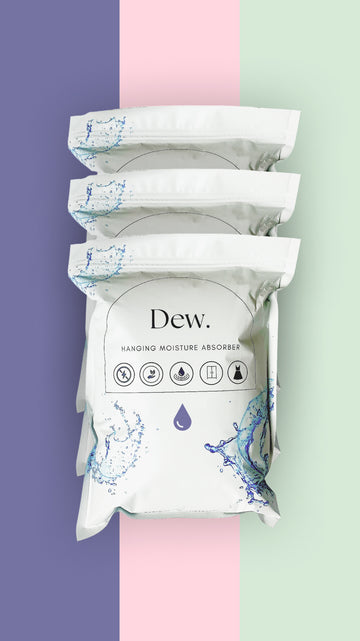
- Install fresh Dew. Moisture Absorbers in wardrobes, cupboards, and storage spaces before the wet season starts
- Make sure exhaust fans are working properly
During-season management
- Do a quick weekly walk-through during sustained wet periods
- Replace moisture absorbers more often — wet seasons can halve their lifespan (our guide on how long moisture absorbers last covers timing)
- Don't dry clothes inside on wet weeks if you can possibly avoid it (see drying clothes inside)
- Keep bathroom fans running for longer than usual after showers
Regional considerations
For region-specific guidance, see our pieces on Sydney humidity, Brisbane humidity, and Melbourne winters.
Where Dew. Moisture Absorbers help most after wet weather
Whole-room dehumidifiers handle the big spaces, but they don't reach inside closed wardrobes, cupboards, and storage cabinets — which is exactly where wet-weather humidity gets trapped and stays. Dew. Moisture Absorbers fill that gap. They're sized for enclosed spaces, work continuously without electricity, and don't need to be remembered — once installed, they handle the humidity that builds up after a storm without intervention.
For Australian homes that face repeated wet-weather events through summer and autumn, distributed moisture absorption across all enclosed spaces is the single most cost-effective intervention.
Frequently asked questions
How quickly can mould grow after a storm?
Mould can begin growing on wet materials within 24–48 hours of saturation. Visible mould often appears within 3–7 days. Acting in the first 48 hours after a wet event is critical.
Do I really need to do anything inside if there are no visible leaks?
Yes. Ambient humidity often stays elevated for days or weeks after major rain, and that humidity drives mould in enclosed spaces (wardrobes, cupboards, behind furniture) where you won't see it until the smell starts.
What's the difference between humidity damage and direct water damage?
Direct water damage shows up where water entered — ceilings, walls, around windows. Humidity damage is diffuse — it appears in enclosed spaces with poor airflow, often far from any actual water source. Both produce mould, but the prevention strategies differ.
Should I run a dehumidifier after every storm?
For a small storm in a well-ventilated home, probably not. For sustained wet weather or major events, a few hours of dehumidifier use in worst-affected rooms is a worthwhile investment. Distributed moisture absorbers across enclosed spaces handle the rest.
Wet weather is the single biggest accelerator of household mould in Australia. Treating storm and rain events as moisture events — not just as inconveniences — changes the outcome for your home and your stuff.


