



Managing mould in Melbourne winters — a practical guide for your wardrobe and home
by Dew. on May 19, 2026
Melbourne's weather is famously unpredictable — four seasons in one day is a local cliche that happens to be true. But for your wardrobe, the real culprit is not the dramatic temperature swings; it is the prolonged cold and damp of Melbourne winters, which create the perfect conditions for mould to establish itself in your home's least-ventilated spaces.
Why Melbourne winters are hard on your home
Melbourne's winter months (June, July, and August) bring average daytime temperatures of 9-13°C and persistent overcast skies with regular rainfall. The city sits in a temperate oceanic climate zone, and its cold, wet winters are characterised by high relative humidity — often above 75% — combined with cold surfaces inside the home.
This combination is problematic. When warm, moisture-laden air (from cooking, showering, and breathing) meets cold walls, windows, and wardrobes, the moisture condenses on those surfaces. In enclosed spaces like built-in wardrobes — particularly those on external walls, which are coldest — condensation can occur nightly, keeping surfaces damp for extended periods. This is the environment mould needs to grow.
The wardrobe mould problem in Melbourne homes
Melbourne homes, particularly older terraces and single-brick homes common in inner suburbs like Fitzroy, Richmond, and Brunswick, have poor wall insulation and thermal mass that amplifies the condensation problem. Wardrobes built against external walls are especially vulnerable because the wall surface behind your clothing can stay cold even when the room temperature is comfortable.
The signs of a humidity problem in a Melbourne wardrobe are often subtle at first: a faint musty smell, small dark spots on the back wall of the wardrobe, or leather shoes and bags developing a white surface bloom. By the time visible mould appears on clothing, the problem has usually been developing for weeks or months.
What Melbourne winters mean for your belongings
The damage caused by sustained winter humidity in Melbourne wardrobes includes mould growth on clothing, shoes, and leather accessories; musty odours that transfer to garments; warping and swelling of timber drawers and shelving; and deterioration of paper, cardboard, and other organic materials stored nearby.
Wool garments — a wardrobe staple in Melbourne's cooler climate — are particularly susceptible to mould damage when stored in humid conditions, as natural fibres absorb and retain moisture.
Protecting your wardrobe during Melbourne winters
Address the condensation source. Where possible, improve insulation on external walls. Heavy curtains and draught seals on windows and doors help maintain a more stable indoor temperature, reducing the temperature differential that causes condensation.
Run your heating regularly. Consistent heating keeps wall surfaces warmer, reducing condensation. The mistake many people make is heating only the living areas — letting bedrooms and storage spaces stay cold and damp during winter.
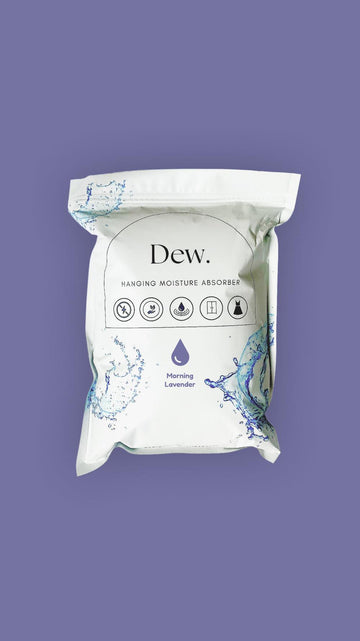
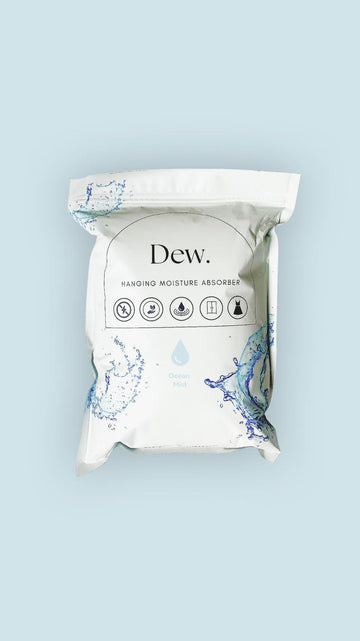
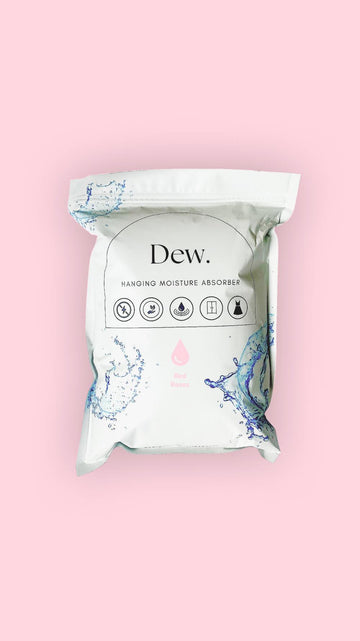
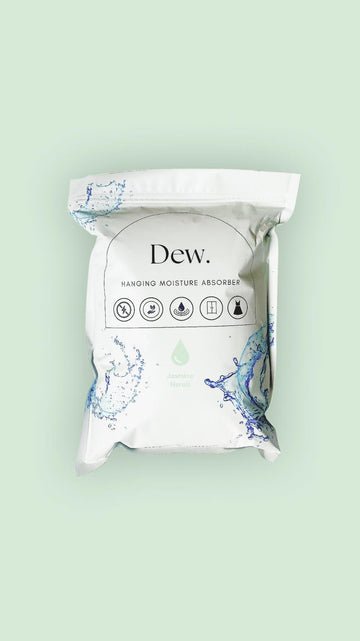
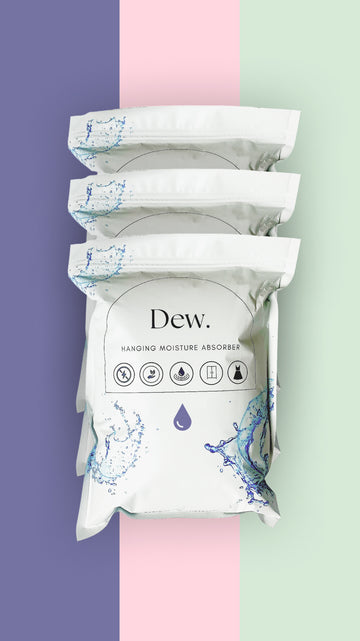
Place desiccant moisture absorbers inside your wardrobes. In Melbourne winters, this is the most targeted and effective intervention for wardrobe mould. Dew.'s hanging moisture absorbers hang directly from your wardrobe rail and actively absorb moisture from the enclosed air space, reducing relative humidity below the threshold where mould can survive. Replace every 60 days through the colder months for continuous protection.
Leave wardrobe doors slightly ajar. This allows warmth from the room to penetrate the wardrobe interior, preventing the cold micro-climate that forms in tightly sealed wardrobes in winter.
Use cedar hangers or blocks. While cedar does not reduce humidity directly, its natural oils help repel mould and moths — a useful complement to desiccant absorbers in Melbourne's damp winters.
Spring and autumn are not off the hook
Melbourne's transitional seasons bring their own moisture challenges. Spring (September to November) often sees the highest rainfall of the year. Autumn brings the first cold nights with warm days — classic condensation weather. Keeping a moisture absorber in your wardrobe year-round, not just through winter, is the most reliable way to stay ahead of the problem.
Melbourne winters are tough on wardrobes. Dew.'s hanging moisture absorbers provide targeted, passive protection for your clothing, shoes, and stored items — exactly when and where Melbourne's cold and damp do the most damage.


