



Jasmine Scent and Its Benefits: The Research Behind the Bloom
by The Dew Team on Jun 27, 2026
The scent of jasmine has documented benefits for mood, sleep, stress, and cognitive performance. Studies show jasmine essential oil reduces anxiety markers, can be as effective as some sedatives for promoting calm, improves sleep quality, and lifts mood through its effect on the brain's GABA receptors. It's one of the few floral scents with strong scientific support behind its traditional uses — and it works beautifully as a home and wardrobe fragrance.
The chemistry of jasmine
Jasmine essential oil is extracted from the flowers of Jasminum grandiflorum or Jasminum sambac through solvent extraction (the flowers are too delicate for steam distillation). The result is an absolute containing dozens of aromatic compounds, with several key actives:
- Benzyl acetate: The dominant compound, responsible for jasmine's characteristic sweet, fruity-floral note
- Linalool: Also found in lavender, known for calming properties
- Benzyl benzoate: Contributes depth and longevity to the scent
- Indole: Present in tiny amounts, this is what gives jasmine its slightly animalic, intensely heady quality — it's part of what distinguishes real jasmine from cheap synthetic versions
The documented benefits of jasmine scent
Calming and anxiety reduction
A study from Ruhr University in Germany found that jasmine essential oil was as effective as the sedative drug valium at calming participants. The compounds bind to GABA receptors — the same receptors that anti-anxiety medications target — producing a measurable reduction in stress markers without the side effects of pharmaceuticals.
Better sleep quality
Research has shown jasmine fragrance in a bedroom improves sleep efficiency, reduces movement during sleep, and leaves people more alert the following morning. In one study, jasmine outperformed lavender for sleep quality — a notable finding given lavender's reputation as the gold standard sleep scent.
Mood elevation
Jasmine has been studied as a natural antidepressant aid. Subjects exposed to jasmine scent report feeling more positive, more alert, and more emotionally balanced. The benzyl acetate appears to stimulate brain activity in regions associated with positive emotion.
Cognitive performance
Some studies have linked jasmine fragrance to improved focus and faster reaction times in cognitive tasks. The effect is mild but consistent.
Romantic and sensory associations
Across many cultures, jasmine is the signature scent of evenings, gardens, and intimate spaces. There's a long history of jasmine in tea, perfumery, and bridal traditions — not just because it smells beautiful, but because the scent carries cultural meaning around relaxation, romance, and ceremony.
How to use jasmine in your home
In the wardrobe
Jasmine pairs beautifully with stored clothing the way lavender does — a subtle scent that masks staleness and signals care. A jasmine-scented moisture absorber works humidity and fragrance into one product, refreshing the scent for as long as the absorber is active.
In the bedroom
Given its sleep benefits, jasmine in the bedroom is a small lifestyle upgrade. A scented absorber in the wardrobe of an ensuite-adjacent bedroom helps with humidity (which is often elevated near bathrooms) and provides a soft background scent.
In bathrooms and ensuites
Bathrooms are high-humidity spaces that benefit from both moisture control and a fresh scent. A jasmine moisture absorber suits the space well, working against the conditions that produce bathroom fogging and condensation.
In living rooms and offices
For homes with home offices, the cognitive benefits make jasmine a thoughtful choice. Combined with low-level humidity control (especially in apartments and inner-city homes), it sets up a space that feels good to spend time in.
Pairing jasmine with humidity control
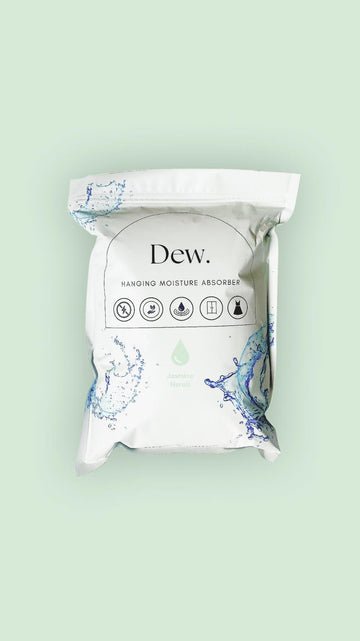
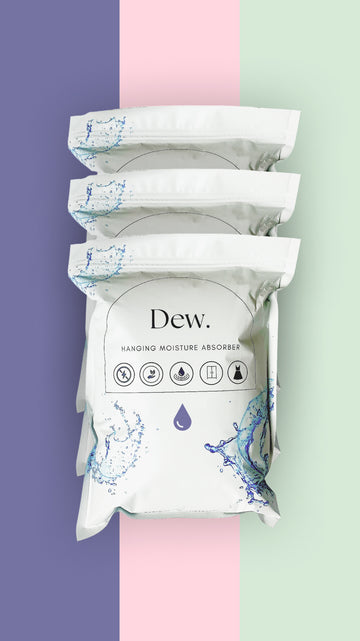
One of the most practical ways to bring jasmine into your home is through a scented Dew. Moisture Absorber. You get the documented mood, sleep, and cognitive benefits of the scent alongside ongoing humidity reduction — the same humidity reduction that prevents musty wardrobes, mould, and damp damage to clothes and leather.
Unlike candles or diffusers, a moisture absorber works passively for 45–90 days at a time. You don't have to remember to top up oil, change cartridges, or worry about open flames. The scent releases slowly and consistently, in the kind of low background level research suggests works better than intense bursts. Our piece on how long moisture absorbers last covers what to expect.
Choosing real jasmine vs synthetic
Real jasmine essential oil is one of the most expensive natural extracts in the world — it takes around 8 million flowers, hand-picked at dawn, to produce 1kg of oil. Most affordable products use jasmine fragrance oils that approximate the scent.
For wardrobe and home use, well-formulated synthetic jasmine is perfectly serviceable — the goal is the sensory experience, not therapeutic-grade aromatherapy. The differences matter more for intensive applications like massage or direct skin contact than for ambient home fragrance.
Frequently asked questions
Is jasmine scent safe for pregnancy?
Concentrated jasmine essential oil is generally avoided during the first two trimesters of pregnancy as a precaution, though the evidence is largely theoretical. Ambient scent from a candle or diffuser at normal household levels is considered low risk. Always check with a doctor or midwife.
Is jasmine safe around pets?
Ambient jasmine scent is generally safe around pets. Concentrated essential oil is another matter — cats are particularly sensitive to many essential oils and should not have direct exposure. Sealed scented products like moisture absorbers are not a concern at typical usage.
Can jasmine help with insomnia?
Several studies suggest jasmine fragrance improves sleep efficiency and reduces nighttime restlessness. It's not a substitute for treating underlying sleep disorders, but as a background scent in the bedroom, it has supporting evidence behind it.
Does jasmine deter insects like lavender?
Jasmine has some mild insect-repellent properties, but it's not as effective as lavender against clothes moths. If pest deterrence is the goal, lavender is the better fit; if mood and sleep are the goal, jasmine wins.
Jasmine is more than a beautiful scent — it's a small daily wellness lever supported by genuine research. Building it into the spaces you live in is a low-effort way to bring something measurably good into your home.


