
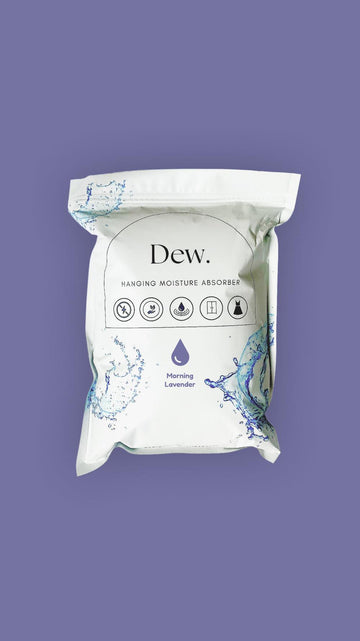
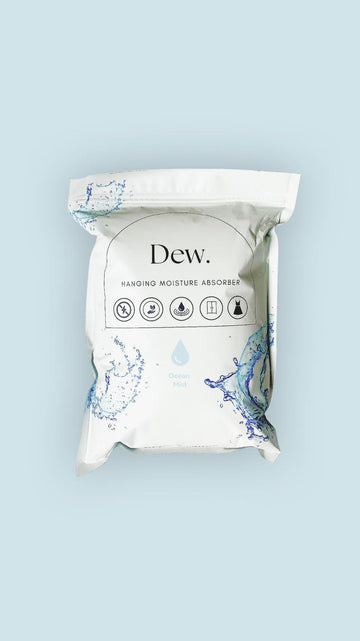

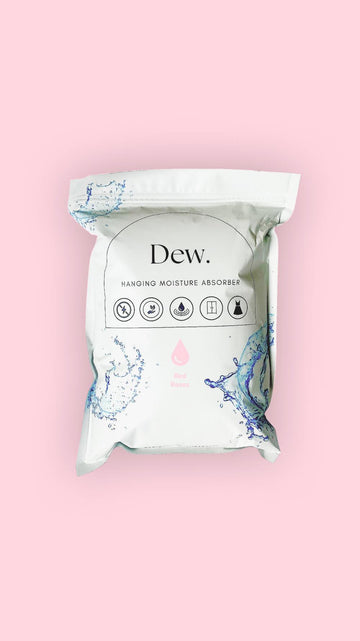
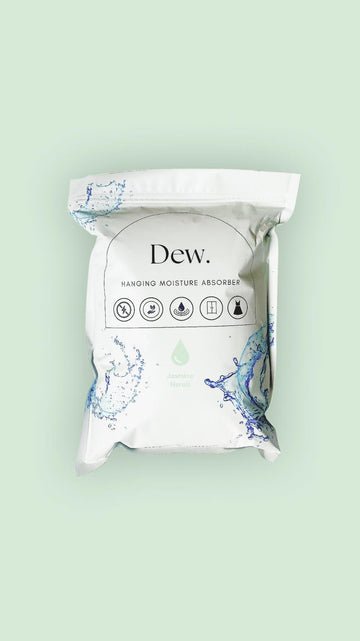



Hanging moisture absorbers are great for homes because they target humidity where it actually accumulates — inside enclosed spaces like wardrobes and cupboards — working continuously without electricity, without noise, without installation, and at a fraction of the cost of any alternative. They solve a real problem (enclosed-space humidity) that whole-room dehumidifiers can't reach and that ventilation alone won't fix.
The problem hanging moisture absorbers actually solve
Most home humidity discussion focuses on living areas — the temperature and feel of your bedroom, the comfort of your living room. But the spaces that quietly drive most of your home's mould and humidity problems aren't your living areas. They're the enclosed spaces: wardrobes, linen cupboards, hallway storage, under-stair cupboards, bathroom vanities, kitchen pantries, laundry cabinets.
These spaces have three characteristics that make them mould magnets:
- Poor airflow — doors stay closed for days at a time
- Trapped humidity — moisture gets in but can't easily get out
- Out of sight — you don't notice the problem until it's already significant
Whole-room dehumidifiers can't reach inside these spaces. Ventilation alone won't fix them — you can't realistically leave wardrobe doors open all day. Air conditioning won't reach them either. Hanging moisture absorbers were specifically designed to address this category of problem.
How hanging moisture absorbers work
A hanging moisture absorber uses a salt-based desiccant (most commonly calcium chloride) that has a strong affinity for water molecules. The desiccant pulls moisture out of the surrounding air, which then drips into a sealed reservoir at the bottom of the unit.
The whole process is passive — there's no fan, no compressor, no power source. The chemistry does the work. A typical hanging absorber will pull 400–500 grams of water out of the air over its lifespan, which is a remarkable amount of moisture for a unit you can hang on a coat hanger.
For more on the mechanics, our comparison piece on moisture absorbers vs silica gel vs dehumidifiers covers the relative strengths of each approach.
The eight reasons they work so well for homes
1. They sit where the moisture is
Humidity tends to settle around fabric in wardrobes and around stored items in cupboards. A hanging absorber sits at exactly this height, in the actual zone where moisture is causing problems. A dehumidifier 6 metres away in a hallway doesn't touch this air.
2. They work continuously
24 hours a day, 365 days a year, for the entire 45–90 day lifespan. There's no "on and off" cycle, no settings, no programming. The unit handles humidity steadily, including overnight when most other moisture solutions are off.
3. No electricity
No impact on your power bill, no risk of overheating, no concern about leaving them running, no electrical safety issues, and they keep working through blackouts. For renters and apartment dwellers especially, the no-power aspect matters — see our apartment mould guide.
4. No noise
Silent operation. This matters more than people realise — dehumidifiers in bedrooms are notoriously disruptive to sleep. A hanging absorber in the bedroom wardrobe does its work without you ever knowing it's there.
5. No installation
You unbox it and hang it on a hook or coat hanger. There's no mounting, no plumbing, no electrician needed, no holes drilled in walls. For renters, this is essential — nothing to remove when you move out.
6. Properly sized for enclosed spaces
Unlike industrial-strength dehumidifiers that are overkill for a wardrobe or silica gel sachets that are undersized, hanging absorbers are designed for the cubic-metre scale of typical home enclosed spaces. The capacity matches the demand.
7. Visible, easy to monitor
The transparent reservoir lets you see at a glance whether the unit is working, how much water it's collected, and when it needs replacing. No guesswork, no maintenance schedule to track — just a look every few weeks.
8. Cost-effective at scale
For a typical home with 5–8 enclosed spaces needing humidity control, hanging absorbers cost a fraction of what a single dehumidifier would cost — and they cover all the spaces a dehumidifier can't reach. Our piece on why it's good to prevent moisture in homes covers the full cost-benefit picture.
Where Dew. Moisture Absorbers work best in a home
Every bedroom wardrobe
The single highest-value placement. Wardrobes are sealed, contain valuable clothing and leather, and people don't open them frequently enough to spot mould early. One unit per standard wardrobe; two for walk-ins.
The linen closet
Stored sheets, towels, and bedding sit untouched for long stretches. Humidity here goes unnoticed until you pull out a damp-feeling towel. See our piece on the linen closet ritual.
The laundry
High moisture generation, often poor ventilation, frequent appearance of damp items. Dew. absorbers significantly help — see our piece on laundry room mould.
Hallway and under-stair cupboards
Often overlooked, these closed storage spaces accumulate humidity and can develop mould that surprises you when you next open the door.
Bathroom vanities and under-sink cabinets
Close to high-humidity environments, frequently storing damp items, with poor airflow. A natural fit.
Kitchen pantries
Dry goods (flour, rice, cereal) benefit from low humidity. See pantry humidity for the detail.
Storage rooms and built-in cabinets
Anywhere that closes and stays closed for extended periods.
Caravans, boats, and holiday homes
Their original use case — spaces that sit sealed and unused for weeks at a time. Our guide on caravan and boat moisture covers this scenario in detail.
Where they're not the right answer
Hanging moisture absorbers are excellent at what they do, but they're not the right tool for every moisture problem. They're not designed for:
- Whole-room humidity: A 50m² living room with 65% humidity needs a dehumidifier, not a moisture absorber
- Post-flood drying: Active water damage needs commercial drying equipment
- Severe structural moisture issues: If your walls are wet, you need diagnosis and repair, not absorbers
- Tiny sealed environments: A camera lens case, jewellery box, or shoe box is better served by silica gel
The scented variant: a small upgrade
One of the practical upsides of hanging moisture absorbers is that the slow, continuous release lets manufacturers add scent to the units. Dew. offers scented variants that combine humidity control with an ongoing background fragrance — lavender for moth protection (see the science behind lavender), jasmine for mood and sleep (see jasmine scent benefits), ocean for that fresh coastal feel (see ocean smell benefits).
The scent renews itself over the life of the absorber, so you don't have to remember to top up oils or replace sachets. It's a small daily upgrade that comes free with the practical humidity control.
Frequently asked questions
Why are hanging moisture absorbers better than dehumidifiers for home use?
They're not better universally — they solve different problems. Dehumidifiers handle whole-room ambient humidity well. Hanging moisture absorbers handle the enclosed-space humidity that dehumidifiers can't reach — inside wardrobes, cupboards, and storage. For most homes, you want both: a dehumidifier for living areas during humid months, and absorbers in every enclosed space year-round.
Are hanging moisture absorbers safe in family homes?
Yes, when hung out of reach of children and pets. The collected solution at the bottom of the unit can cause stomach upset if ingested, so place units high in wardrobes and cupboards. Sealed reservoirs prevent accidental spills.
How many moisture absorbers does a typical home need?
For a 3-bedroom Australian home, expect to use 6–10 units at any given time: 3 bedroom wardrobes, 1 linen closet, 1 laundry, 1 hallway cupboard, plus any built-in storage or walk-in robe spaces. The exact number depends on your home's layout.
How often do hanging moisture absorbers need replacing?
Every 45–90 days depending on humidity and how much air the space exchanges. Our guide on how long moisture absorbers last covers the timing by Australian region.
Hanging moisture absorbers solve a real, specific problem — enclosed-space humidity — that other tools can't reach. They're not flashy, they're not high-tech, and they're not the answer to every moisture problem. But for the spaces in your home where mould most quietly starts, they're one of the best small investments you can make.


