






Mould and Apartments: A Renter's Guide to Staying Mould-Free
by The Dew Team on Jun 18, 2026
Apartments are particularly prone to mould because of their sealed, low-ventilation design, shared walls and ceilings that can transfer moisture from neighbours, smaller bathrooms with overworked exhaust fans, and the practical reality that renters often can't make structural changes to address it. For apartment dwellers — especially renters — mould management is about controlling what you can within the constraints of the space and the lease.
Why apartments have a mould problem
Apartments have all the standard mould risk factors plus several unique to the building type:
Sealed envelopes
Modern apartments are built airtight for energy efficiency. The intention is to keep heated or cooled air in — but the side effect is that moisture has nowhere to go. Older free-standing homes "breathe" through countless tiny air gaps; modern apartments don't.
Shared walls and ceilings
Your neighbour's bathroom leak, drying clothes, or running humidifier can affect your apartment. Bathroom and laundry walls shared with neighbouring units are particularly vulnerable.
Smaller spaces, same moisture loads
A two-bedroom apartment generates roughly the same moisture from cooking, showering, breathing, and washing as a small house — but the space to dissipate it is much smaller. Indoor humidity climbs faster.
Limited window exposure
Many apartments have windows on only one side. Cross-ventilation is impossible without opening a hallway door (a security and privacy issue most renters avoid).
Inadequate exhaust ventilation
Bathroom and laundry exhausts in apartments often vent into roof voids or shared shafts rather than directly outside, which means moisture doesn't fully leave the building.
Restricted modifications
Renters can't install dehumidifiers in built-in cabinetry, replace weak exhaust fans, or open up sealed walls. Owner-occupiers often can't either if it requires body corporate approval.
For the practical room-by-room approach to apartment moisture, our existing piece on apartment moisture solutions covers the basics. This piece focuses on the renter and lease side.
Renter rights around mould in Australia
The legal position varies by state, but some general principles apply across most Australian jurisdictions:
Landlord obligations
- Provide a habitable dwelling. Mould caused by building defects — leaks, broken seals, inadequate ventilation — is generally the landlord's responsibility
- Repair structural causes promptly. Once notified, landlords typically have a reasonable time to act, with timeframes varying by state
- Disclose known issues. Pre-existing mould should be disclosed before a lease is signed
Tenant obligations
- Notify the landlord in writing of any mould or moisture issues
- Maintain reasonable ventilation and use exhaust fans as intended
- Avoid creating excessive humidity — indoor washing drying being a common point of dispute
- Allow access for the landlord to inspect and repair
The grey zone
Most mould disputes fall in a grey area: was it caused by inadequate ventilation in the building (landlord), or by tenant lifestyle (drying washing inside, not running exhaust fans)? Both factors usually contribute. The practical approach is to take all the steps you can as a tenant while documenting any structural issues for your landlord.
What apartment dwellers can do themselves
1. Run exhaust fans religiously
20+ minutes after every shower. Most apartment bathroom fans are weak — they need extra time to clear the moisture they should clear in 5 minutes in a well-designed bathroom.
2. Use moisture absorbers throughout
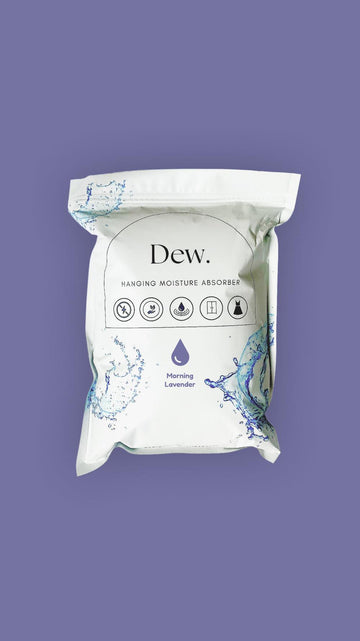
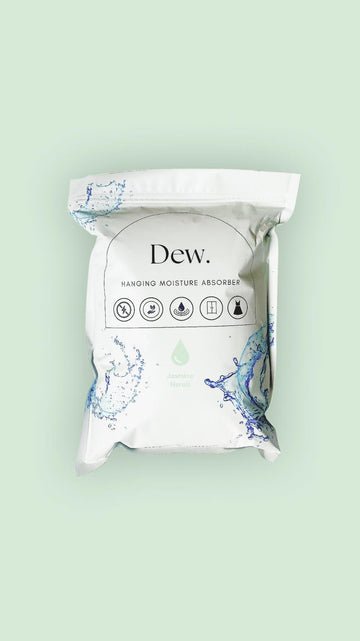
This is where apartments most need a solution like Dew. Moisture Absorbers. They:
- Require no installation or structural changes (perfect for renters)
- Don't use electricity (no impact on your power bill)
- Sit inside enclosed spaces where humidity is worst (wardrobes, cupboards, under sinks)
- Don't trigger smoke alarms or set off building safety systems
- Pack down to nothing when you move out
For apartments, the rule of thumb is one moisture absorber per enclosed space, plus one extra in the laundry or worst-affected room.
3. Don't dry washing inside
If you can possibly use a balcony, covered outdoor space, or a vented dryer, do. Drying washing inside an apartment adds 2–3 litres of water to indoor air per load and is the single biggest mould driver in apartment living. (See drying clothes inside without creating moisture problems for the practical management.)
4. Open windows whenever possible
Even 15 minutes of cross-flow ventilation a day (window on one side, open door to a hallway window on the other) makes a measurable difference to apartment humidity.
5. Address condensation immediately
Wipe condensation off windows in the morning, don't let it pool. Run a dehumidifier on the worst rooms if you have one, even for an hour a day.
6. Position furniture for airflow
Don't push wardrobes flush against external walls. Don't push bed frames into corners where airflow is dead. Even 5cm of breathing space behind large furniture significantly reduces mould risk.
Apartment-specific mould risk areas
Wardrobes against external walls
The classic apartment mould spot. The wall is cooler than the room, humid air condenses on it, and the wardrobe traps the moisture against fabric. A moisture absorber in the wardrobe is essential; consider a thin sheet of bubble wrap or insulation pinned to the inside back of the wardrobe if you're allowed to.
Behind built-in furniture
Apartments often have built-in wardrobes and storage that sits flush to walls. The gap between cabinet and wall doesn't get air. Mould can build up here invisibly for years.
Bathroom ceilings and corners
Poor exhaust ventilation plus warm showers plus paint finishes that aren't fully mould-resistant = mould patches on ceilings. Wipe down ceiling and walls weekly to catch early.
Under the kitchen sink
A common slow-leak location that creates mould inside cabinets. Keep cleaning products tidy enough that you'd notice a leak quickly.
Air conditioner units
Split-system AC units in apartments can develop mould inside if filters aren't cleaned. The unit then circulates mould spores through the whole apartment. Clean filters monthly.
When to escalate to your landlord
Notify in writing (email is fine) if:
- You find any leaks, however small
- Mould keeps returning to the same spot after cleaning
- Bathroom exhaust fans don't seem to work effectively
- You notice mould inside built-in cabinetry you didn't install
- Anyone in the apartment is experiencing health issues that started after moving in
Document everything with photos, dates, and written reports. If the landlord doesn't act, your state's tenancy authority (NCAT in NSW, VCAT in Victoria, QCAT in Queensland, etc.) can mediate.
Frequently asked questions
Why do apartments get mould so easily?
Modern apartments are designed to be sealed for energy efficiency, which traps moisture inside. Combined with smaller spaces, shared walls, weaker exhaust ventilation, and limited cross-flow airflow, this creates conditions where humidity builds up faster than in free-standing homes.
Who is responsible for mould in a rental apartment?
It depends on the cause. Mould from structural issues (leaks, inadequate ventilation, poor sealing) is generally the landlord's responsibility. Mould from tenant lifestyle factors (indoor washing drying, not using exhaust fans) is generally the tenant's. Most cases involve both, and resolution comes from each party doing their part.
Can I use a dehumidifier in a rental apartment?
Generally yes — portable dehumidifiers are tenant-owned appliances that don't require landlord permission. Just make sure the unit doesn't overload circuits in older apartments. Moisture absorbers are an even easier choice for renters because they require no power and no installation.
What's the easiest mould prevention for an apartment renter?
A combination: Dew. Moisture Absorbers in every wardrobe and cupboard, religious use of bathroom exhaust fans, drying washing outside or in a vented dryer, opening windows daily for cross-flow ventilation, and reporting any leaks or structural issues to the landlord in writing.
Apartment living doesn't have to mean apartment mould. The constraints are real — you can't restructure the building — but the tools you can deploy as a resident are enough to keep most apartments mould-free with a small ongoing investment of attention.


