



Dogs and Mould: How Humidity Affects Your Dog's Health
by The Dew Team on Jun 25, 2026
Dogs are particularly vulnerable to household mould because they spend most of their time at floor level (where humidity settles), they lie on bedding and carpets that hold moisture, they breathe at a higher rate than humans, and they often have skin folds, ears, and coats that trap dampness against their bodies. Mould exposure can cause respiratory issues, chronic skin and ear infections, digestive problems, and behavioural changes — and many dogs suffer for years before owners connect the symptoms to their home environment.
Why dogs are more vulnerable than you might think
A dog's life puts them in close contact with the parts of the home where mould most often grows:
- Floor-level living: Humidity and spores tend to settle at floor height. A dog sleeping on a rug is in the most mould-exposed zone of the room.
- Breath rate: Dogs breathe roughly 2-3 times faster than humans at rest, meaning they inhale proportionally more air — and more spores — every hour.
- Self-grooming: Dogs lick their paws, fur, and bedding, ingesting whatever has settled there.
- Skin folds and ears: Breeds with floppy ears, skin folds, or thick coats (Bulldogs, Pugs, Shar-Peis, Cocker Spaniels, Labs) trap moisture against the skin, creating perfect conditions for fungal growth.
- Outdoor exposure: Dogs go outside regularly and bring damp paws and fur back into the home, contributing to indoor humidity over time.
Add Australia's humid coastal climate and you have a country full of dogs living in conditions that quietly affect their health. Our piece on pets and mould covers the broader picture, but dogs deserve their own attention.
How to spot mould-related issues in your dog
The symptoms are often misdiagnosed as allergies, food intolerances, or "just one of those things." Watch for:
Skin and coat
- Persistent itching with no fleas or obvious cause
- Hot spots that keep returning
- Hair loss in patches, particularly around the paws, belly, and skin folds
- Greasy or smelly coat that doesn't improve with bathing
- Yeast infections in skin folds, between toes, or around the genital area
Ears
- Recurring ear infections, particularly in floppy-eared breeds
- Dark, smelly discharge from the ear canal
- Head shaking and scratching at ears
- Sensitivity around the ears even after vet treatment
Respiratory
- Persistent cough that gets worse at home and better outside
- Wheezing or laboured breathing
- Reverse sneezing (a distinct, repeated snorting)
- Discharge from the nose or eyes
Digestive and general
- Vomiting or diarrhoea that comes and goes without obvious dietary cause
- Loss of appetite
- Unexplained weight loss
- Lethargy or lack of interest in usual activities
The key tell is symptom patterns that match home exposure — your dog seems better at boarding kennels or your parents' house, then symptoms return when they come home.
Where mould affects dogs in your home
Their bed
Dog beds are mould magnets — they absorb moisture from skin, saliva, and damp fur, sit at floor level, rarely get washed weekly, and are often stored in laundries or mudrooms where ambient humidity is highest. Wash beds weekly in hot water, dry completely (ideally in sunlight), and replace covers and inserts when they start to smell despite cleaning.
Their crate or kennel
Indoor crates, especially fabric-lined ones, hold moisture from a dog's breath, body heat, and any accidents. Wipe down crate frames with vinegar solution weekly and wash any bedding components.
The laundry/mudroom
Where wet towels, dirty paws, and damp dog gear live. This is often the most mould-prone room in the home — our piece on laundry room mould covers it in detail.
Where they sleep at night
If your dog sleeps in your bedroom, their breath and body moisture contribute to humidity in that space. Bedrooms with dogs need slightly more aggressive moisture management than dog-free bedrooms.
Outdoor kennels
For dogs that spend significant time in outdoor kennels, mould in the kennel itself is a real risk. Timber kennels in humid Australian conditions develop mould inside the walls, particularly during wet seasons. Pressure-clean and air kennels regularly.
Protecting your dog from mould
1. Control humidity in living spaces
Aim for 45–55% relative humidity in the rooms your dog spends most time in. Our guide to the ideal humidity level for an Australian home covers the targets in detail.
2. Use moisture absorbers strategically
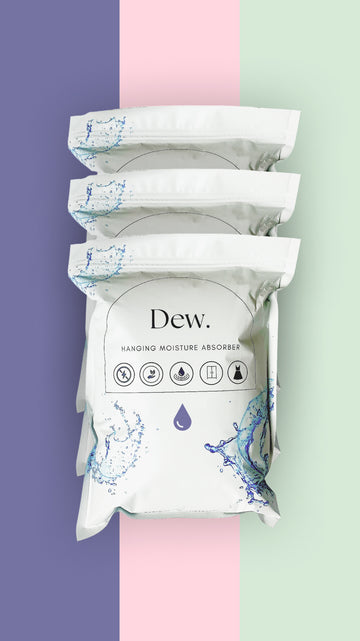
Place Dew. Moisture Absorbers in the laundry where dog gear lives, in cupboards where food is stored, and in any small rooms where dogs sleep. They work continuously without electricity, which is ideal for the kind of low-grade ongoing humidity that builds up around pet areas.
3. Dry your dog properly after walks and baths
A damp dog drying off on the couch or carpet transfers moisture into fabric that takes a long time to dry. Towel-dry thoroughly, particularly between toes, in skin folds, and inside ears for floppy-eared breeds. Consider a pet-safe blow dryer in winter.
4. Wash bedding weekly
Hot water, full dry, ideally in sunlight. Two sets means one's always clean.
5. Store food and treats in airtight containers
Damp kibble grows mould quickly, and mycotoxins in pet food are a documented health risk. Containers with tight seals, kept in cupboards with moisture control, last much longer.
6. Check the spaces dogs actually use
When you do home maintenance checks, get down on their level. Look behind their crate, under furniture they sleep under, in the corner where their water bowl sits. Mould often grows in these overlooked spots first.
If your dog has been affected
- See your vet with notes on when symptoms appear and how they relate to time at home
- Identify mould sources in your home — our signs of mould guide covers detection
- Replace heavily contaminated bedding rather than trying to clean it — mould in foam is hard to fully remove
- Improve humidity control in the affected spaces with moisture absorbers
- Bathe your dog per vet recommendation to remove spores from their coat
- Be patient — chronic exposure issues can take weeks to fully resolve once the source is removed
Frequently asked questions
Can mould cause ear infections in dogs?
Yes. Mould and yeast thrive in moist, dark environments — floppy ears are perfect for both. Many recurring ear infections in dogs are linked to fungal overgrowth that flourishes in humid home environments.
Are some breeds more sensitive to mould?
Yes. Brachycephalic breeds (Pugs, Bulldogs, Boxers, Boston Terriers) have compromised airways that make respiratory issues from mould more severe. Breeds with heavy coats, deep skin folds, or floppy ears (Cocker Spaniels, Bassets, Shar-Peis) are more prone to skin and ear issues from humidity.
Are moisture absorbers safe in homes with dogs?
Yes, when hung out of reach. Dew. Moisture Absorbers should be placed where curious dogs can't chew or knock them down — the collected solution can cause stomach upset if ingested. Wardrobes, high shelves, and laundry cupboards are all good spots.
How quickly will my dog improve once mould is addressed?
Acute symptoms (sneezing, eye discharge) often improve within days. Chronic issues (skin infections, ear problems) take weeks to resolve as the underlying inflammation settles down. Be patient and follow your vet's treatment plan alongside the environmental changes.
Dogs share every part of your home that has humidity issues, and they share them more intensely than you do. Protecting them from mould is largely about protecting your home from moisture — the two go together, and a healthier home means a healthier dog.


