


Mould affects pets in many of the same ways it affects people — respiratory irritation, skin problems, lethargy, and in extreme cases serious illness — but pets are often more vulnerable because they spend more time at floor level where humidity settles, they groom themselves and ingest spores, and they can't tell you when they're not feeling right. Protecting pets from mould is mostly about controlling humidity in the spaces they live in.
Why pets are particularly vulnerable
Mould spores are inhaled, ingested, and absorbed through the skin. Pets are exposed to all three pathways more than humans because of how they live:
- They spend hours at floor level, where humidity and spores tend to settle
- They lie on carpet, rugs, and bedding — fabric that holds moisture and mould
- They groom themselves, ingesting whatever has settled on their coat
- Their respiratory rate is faster than humans', so they breathe in proportionally more air per hour
- They're closer to floor-level vents and skirting boards, where mould often grows unseen
Small dogs, cats, rabbits, and pocket pets are particularly affected because they spend nearly all their time at floor level. Birds are even more sensitive due to their highly efficient respiratory systems — mould in a home can be dangerous to a bird before humans notice anything.
Signs of mould exposure in pets
Pets can't tell you they're feeling unwell, so the signs are subtle. Watch for:
- Respiratory symptoms: coughing, sneezing, wheezing, laboured breathing, nasal discharge
- Skin issues: itching, hair loss in patches, recurring skin infections, ear infections that won't clear
- Digestive symptoms: vomiting, diarrhoea, reduced appetite
- Behavioural changes: lethargy, depression, reluctance to play or move
- Eye irritation: watery or red eyes, excessive blinking
If your pet has multiple symptoms that improve when they spend time away from home and return when they come back, mould is worth investigating. A vet visit is the right starting point — they can rule out other causes and run blood tests if exposure is suspected.
The spaces in your home that put pets most at risk
Pet beds and crates
Pet bedding is one of the most overlooked mould risks. It absorbs moisture from skin, fur, and drool, sits at floor level, and rarely gets washed often enough. Wash pet beds weekly in hot water, and dry completely — ideally in sunlight, which kills mould spores.
Wet outdoor coats and towels
If your dog comes in wet from rain or a walk, the towels and their coat take time to dry. Damp pet items left in a laundry or mudroom become mould hotspots quickly.
Carpet and rugs
Spills, accidents, and wet paws can leave moisture that goes deep into carpet padding. Steam clean carpets at least annually and treat any incident immediately with thorough drying.
Cat litter areas
Damp litter, clumped urine, and the corner of the laundry where it lives can all develop mould. Keep the area dry and ventilated.
Aquariums and water bowls
The areas around fish tanks and water bowls have elevated humidity. Wipe up splashes and consider where these go in the home — not next to walls or wooden furniture.
How to protect pets from mould
1. Control whole-home humidity
Aim for 45–55% relative humidity throughout the home. Our guide to the ideal humidity level for an Australian home covers the targets, and how to test humidity walks through the practical setup.
2. Use moisture absorbers in pet-heavy spaces
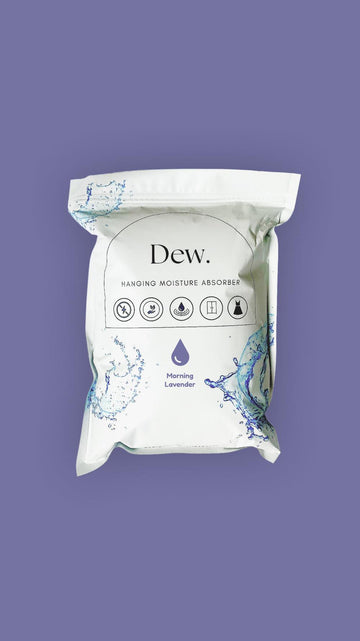
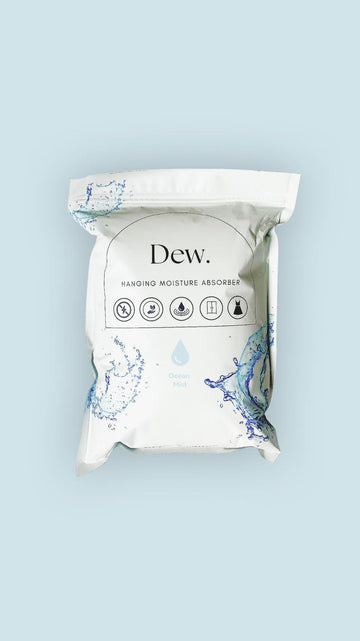
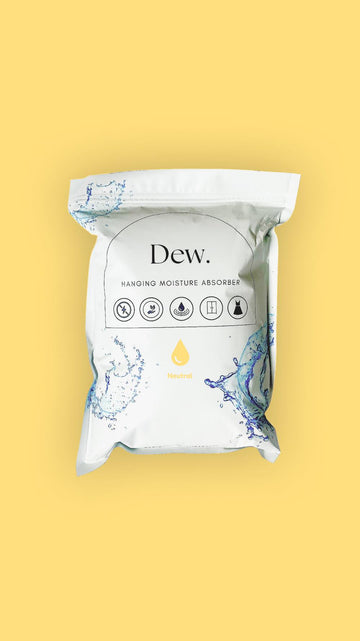
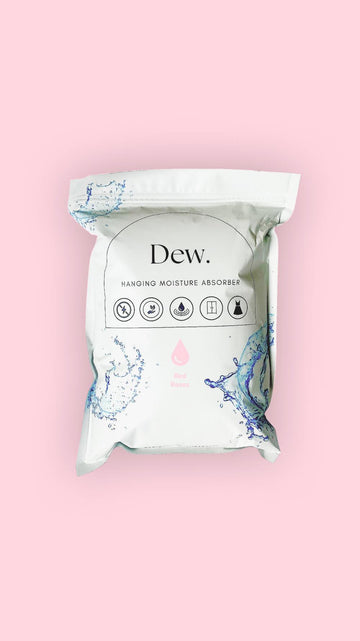
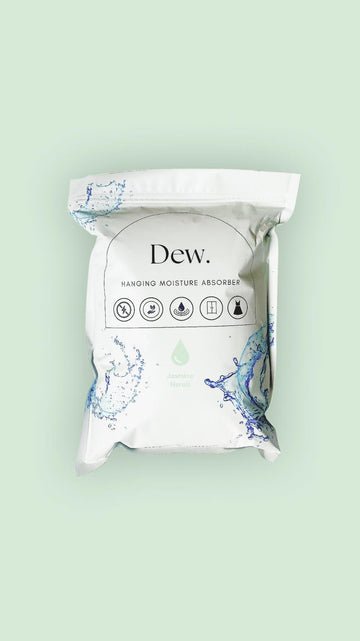
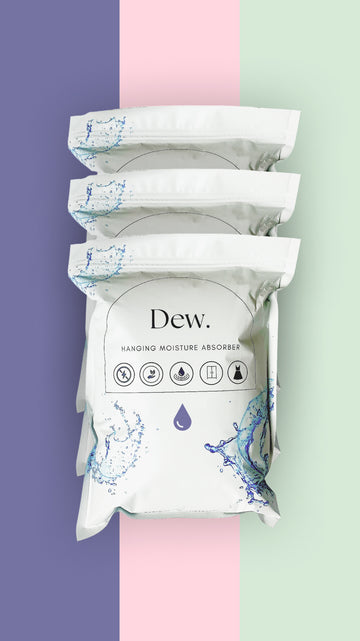
Place Dew. Moisture Absorbers in laundries where pet items live, cupboards where pet food and treats are stored, and any small rooms where pets spend long periods. A hanging moisture absorber pulls excess water from the air continuously and works without electricity — ideal for the spaces pets actually use.
3. Wash pet bedding weekly
Hot water, fully dry, ideally in sunlight. Consider having two sets so one is always clean and ready while the other is being washed.
4. Dry pets thoroughly
After baths or walks in the rain, towel-dry as much as possible and let the coat finish drying somewhere ventilated. Damp fur on a sleeping dog overnight is enough moisture to grow mould in bedding.
5. Keep pet food dry
Store dry food in airtight containers in cupboards with moisture control. Damp kibble grows mould quickly, and mycotoxins from contaminated pet food are a documented health risk.
6. Check pet areas during your home checks
When you do your monthly moisture sweep of the home, include pet beds, behind the litter tray, under crates, and around water bowls. These spaces often hide moisture issues that don't show up elsewhere.
If your pet has been exposed to mould
- See your vet with a clear description of symptoms and timing
- Identify and address the mould source in your home — our piece on signs of mould covers what to look for, and the principles apply across the home
- Wash all pet bedding and replace anything that can't be thoroughly cleaned
- Bathe the pet per your vet's recommendations to remove spores from coat and skin
- Improve ventilation and humidity control in the affected areas
- Monitor symptoms — improvement usually starts within days of removing the exposure
Frequently asked questions
Can dogs get sick from mould in a house?
Yes. Dogs can develop respiratory infections, skin conditions, and digestive issues from prolonged mould exposure. Some breeds (brachycephalic breeds like pugs and bulldogs) are more vulnerable due to their respiratory anatomy.
Are cats more sensitive to mould than dogs?
Cats are generally similarly sensitive, but their grooming habits mean they ingest more spores from their fur. Cats with asthma (a documented feline condition) are particularly vulnerable.
Are moisture absorbers safe around pets?
Hanging moisture absorbers like Dew. are safe when used correctly — hung out of reach so pets can't chew or knock them. The collected water inside contains the salt-based desiccant solution, which can cause stomach upset if ingested, so keep them above pet height.
Can mould kill pets?
In extreme cases, yes — particularly with birds, very young or very old pets, and pets with pre-existing respiratory conditions. Most healthy adult pets won't die from typical household mould exposure, but chronic exposure can cause significant ongoing health issues.
Pets share your home and share your air. Controlling humidity isn't just about protecting your clothes and walls — it's part of keeping the family healthy, and the family includes the four-legged members.


