



The Ultimate Guide to Protecting Leather Bags from Mould
by The Dew Team on Jun 01, 2026
Leather bags are particularly vulnerable to mould because leather is porous, holds moisture, and is rich in the natural oils that mould feeds on. Protecting them comes down to three things: control humidity around them, store them with airflow and structure, and treat them periodically to maintain the leather itself. A premium leather handbag can last decades with care — or develop irreversible mould damage in a single humid summer.
Why leather bags are mould magnets
Leather is animal hide, which means it's organic, porous, and contains natural fats and proteins. Three properties make it especially mould-prone:
- It absorbs ambient humidity and releases it slowly, so it stays damp long after the air around it has dried
- The oils used to tan and treat leather are themselves a food source for some mould species
- Linings are often natural fibres (cotton, linen, suede) that retain moisture more than synthetic linings
If you've ever pulled a handbag out of a wardrobe after a humid summer and found a white powdery film on the leather, that's mould bloom — the early stage. Caught early it cleans off. Left for months, the mould penetrates the leather and damages the structure permanently. Our piece on signs of mould in your wardrobe covers what to watch for across all stored items.
The right way to store leather bags
1. Clean before storing
Always clean leather bags before long-term storage. Wipe the exterior with a slightly damp microfibre cloth, then dry with a soft dry cloth. Empty all interior pockets and shake out lint and debris. Any organic residue — crumbs, lint, makeup smudges — is fuel for mould.
2. Stuff to maintain structure
Stuff bags lightly with acid-free tissue paper, clean cotton fabric, or the original dust bag scrunched up. This maintains the shape and prevents creasing. Don't use newspaper — the ink can transfer. For more on getting handbag storage right, our companion guide on storing handbags so they don't go mouldy goes deeper.
3. Store in a dust bag (but not plastic)
Use the original cotton dust bag if you have it, or a pillowcase. The key is breathability — the fabric lets moisture move around the leather rather than trapping it. Never store leather in plastic. Plastic seals in moisture and accelerates mould.
4. Keep them off the floor and away from walls
Floors are cooler and more humid. External walls can get condensation. The best spot is a shelf in the middle of an internal wardrobe, with breathing room around each bag.
5. Control the humidity around them
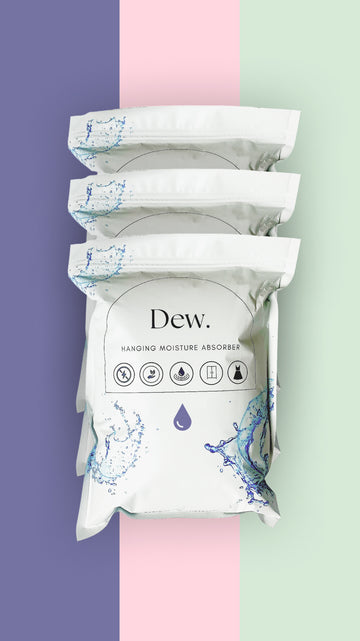
This is the single most important step. Aim for 45–55% relative humidity — dry enough to discourage mould but not so dry that the leather cracks. A hanging moisture absorber in the wardrobe maintains this range automatically. Our comparison of moisture absorbers vs silica gel vs dehumidifiers covers which tool suits which space.
How often to check and condition
Leather bags in storage need a quick check every 4–6 weeks. Take them out, wipe with a dry cloth, look for any white film, dark spots, or unusual smell. If everything's clean, put them back. A great moment to do this is during your annual wardrobe spring clean.
Every 6 months — or before extended storage — condition the leather. Use a quality leather conditioner appropriate for your bag type. Apply sparingly with a soft cloth, let it absorb for 10–15 minutes, then buff off any excess. Conditioned leather is more resistant to moisture absorption.
For exotic leathers (python, ostrich, crocodile), follow the brand's specific care instructions. Some treatments that work on standard leather will damage exotics.
If you spot mould: a step-by-step rescue
- Take the bag outside immediately to avoid spreading spores to other items
- Brush off loose mould with a soft brush (a clean shoe brush works well)
- Mix a 1:1 solution of white vinegar and water
- Lightly dampen a microfibre cloth with the solution — do not soak the leather
- Wipe the affected area in small circles, working out from the centre
- Wipe again with a clean damp cloth to remove vinegar residue
- Dry slowly at room temperature, away from direct heat or sunlight
- Once fully dry, condition the leather to restore oils stripped by cleaning
For deep mould or severe damage, take the bag to a specialist leather cleaner. Heritage leather goods are worth the professional restoration cost. For a more detailed step-by-step on cleaning bags specifically, see how to remove mould from handbags.
Special considerations for premium bags
Premium leather bags (Hermes, Chanel, Gucci, Bottega Veneta, etc.) often have specific care recommendations from the maison. A few universal points:
- Hardware can tarnish in humid storage — a moisture absorber helps
- Coloured leather can transfer dye to lighter pieces — store separately
- Suede and nubuck are more vulnerable than smooth leather — use silica gel sachets inside
- Vintage and patina leathers need gentler handling — always test cleaning on an inconspicuous area
Frequently asked questions
What's the ideal humidity for storing leather bags?
Between 45% and 55% relative humidity. Below 40% and leather can dry out and crack; above 60% and you risk mould. Our guide to the ideal humidity level for an Australian home covers the targets in more detail.
Can I store leather bags in airtight containers?
No. Leather needs to breathe. Sealed containers trap moisture and accelerate mould growth.
Will a moisture absorber damage leather?
A properly designed hanging moisture absorber placed in the same wardrobe (not touching the bag) only removes moisture from the air. It won't dry out the leather provided you keep humidity above 40%.
How often should I take out stored handbags?
Every 4–6 weeks for a quick check and air-out is ideal. Every 6 months at minimum.
Leather bags reward care with decades of use. Get the humidity right, store them with airflow and structure, and they'll outlast the trends they were designed for.


