



Hanging Moisture Absorbers vs Silica Gel vs Dehumidifiers: Which Actually Works?
by The Dew Team on Jun 08, 2026
For most enclosed spaces — wardrobes, drawers, bathrooms, storage tubs — hanging moisture absorbers are the most practical choice. Silica gel suits small sealed items like camera bags and shoe boxes. Dehumidifiers are best for whole rooms with serious moisture problems. Each tool solves a different scale of moisture problem, and using the wrong one is why people get frustrated.
How each one actually works
Hanging moisture absorbers
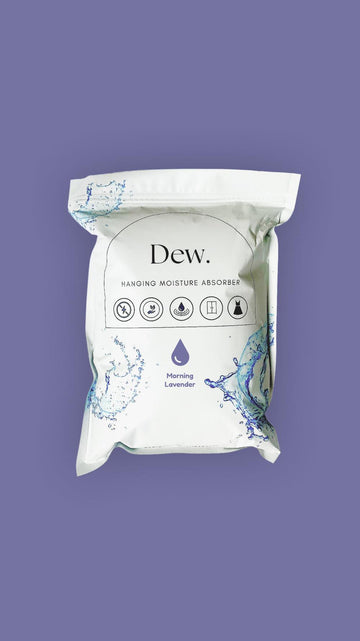
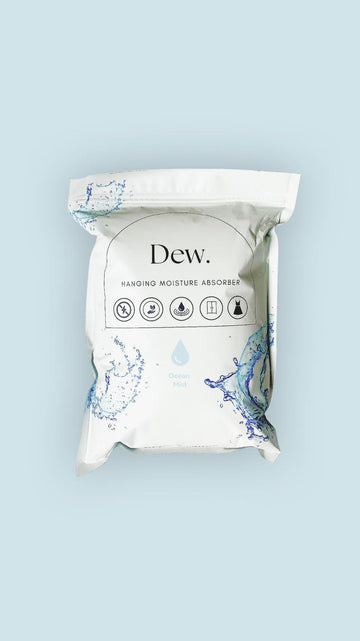
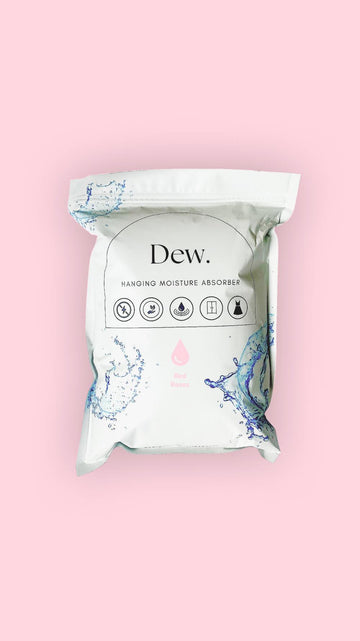
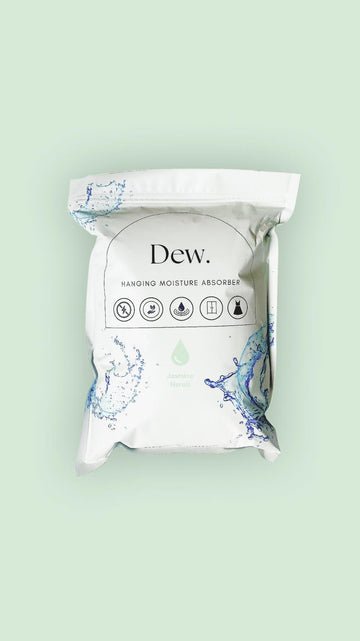
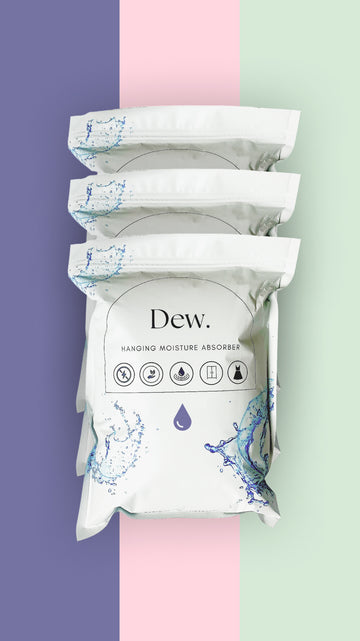
Hanging absorbers use a salt-based desiccant (usually calcium chloride) that pulls water vapour out of the air. The collected water drips into a sealed reservoir at the bottom of the unit. They work continuously, passively, without electricity, and are sized for the volume of an enclosed space like a wardrobe or pantry. For a step-by-step on getting one set up well, see how to use Dew.
Best for: Wardrobes, drawers (the long flat ones), storage rooms, bathrooms, holiday homes left empty for months at a time — see also our long-term storage guide for caravans and boats.
Silica gel
Those small white sachets that come in shoe boxes and electronics packaging. Silica gel is a porous form of silicon dioxide that traps moisture in its internal pores. Each sachet holds a very small amount of water before it's saturated, and most can be reactivated by heating in a low oven.
Best for: Tiny sealed environments — camera bags, jewellery boxes, individual handbags, gun safes, archive document storage. Our piece on storing cameras and electronics in humid Australian homes is a good follow-on for that use case.
Dehumidifiers
Electric appliances that pull air across cold coils, condense the water out of it, and either collect it in a tank or pump it to a drain. They can shift large volumes of moisture quickly and let you set a target humidity.
Best for: Whole rooms, basements, garages, drying clothes indoors in winter, post-flood drying, very humid climates where ambient humidity is the underlying problem. For apartments specifically, our guide on apartment moisture solutions covers small-space strategies.
Capacity and cost: a realistic comparison
The right tool depends on the volume you're trying to control and how much moisture is in the air. Here's a realistic comparison:
- Hanging moisture absorber: Around 400–500g of water capacity per unit, lasting 45–90 days depending on conditions (more on this in how long do moisture absorbers last). Cost per month: $5–10. No power use.
- Silica gel sachets: A few grams per sachet, lasting weeks in a sealed container. Cost per month: cents, but capacity is tiny.
- Dehumidifier: 10–20 litres per day in a 50m² room. Cost per month in power: $20–60 depending on use. Plus the appliance cost ($300–1,500+).
Which actually works for your situation?
For wardrobes and clothing storage
Hanging moisture absorbers win for one reason: they hang at clothing height. Humidity tends to settle around the fabric itself, and a hanging unit sits in that zone. A dehumidifier on the bedroom floor pulls humidity from the room but doesn't reach inside a closed wardrobe. Silica gel sachets get saturated almost immediately in a space that size. If you're dealing with an existing smell or mould issue, our guide on why wardrobes smell musty covers the fix.
For leather handbags and shoes
A combination works best. A hanging absorber in the cupboard for the ambient air, and silica gel sachets inside each handbag or pair of shoes to protect them individually — our leather bag protection guide walks through the full setup.
For bathrooms and laundries
Hanging absorbers do well in bathrooms and laundries when used alongside an exhaust fan. For homes without exhaust ventilation, a small dehumidifier may be necessary.
For whole-room humidity
If your home consistently reads above 65% humidity in living areas, you have a building-level moisture problem and need a dehumidifier. Moisture absorbers can't keep up with that volume of air.
For boats, caravans, holiday homes
Hanging absorbers are ideal because you can leave the space sealed for months without electricity. This is exactly what they were designed for.
Common mistakes people make
- Using a dehumidifier in a closed wardrobe: They need airflow to work. A closed wardrobe defeats the purpose.
- Relying on silica gel for a whole wardrobe: The capacity is too small. You'd need hundreds of sachets to match one hanging absorber.
- Running a dehumidifier 24/7 in low humidity: Wasteful, and can over-dry leather goods, causing cracking.
- Forgetting to empty or replace absorbers: Once full, they stop working and can even leak.
Frequently asked questions
Are hanging moisture absorbers reusable?
Most aren't — the calcium chloride absorbs water and converts to a brine solution that's safely discarded. Some brands offer refillable units. Silica gel, in contrast, is reusable and can be reactivated.
Are moisture absorbers safe around clothes?
Yes, as long as you use a properly designed product with a sealed reservoir. The active ingredient stays contained, and most modern units have spill-resistant designs. Avoid DIY rock-salt-in-a-jar setups around fabric.
How do I know when a moisture absorber is full?
The reservoir at the bottom of the unit becomes visibly full of liquid. Most quality absorbers have a transparent base so you can see the water level at a glance.
Can I use multiple methods together?
Absolutely. A dehumidifier for ambient room humidity, hanging absorbers in each wardrobe, and silica gel for sealed bags or boxes is the gold standard for serious humidity problems.
The right tool depends on the size of the space and how much moisture you're up against. For most everyday wardrobe and home storage problems, a hanging moisture absorber is the right answer — it sits where the humidity actually is, costs less than $10 a month, and works while you sleep.


