




Why are apartments more humid than houses?
Apartments are more humid than houses because they have less surface area to lose moisture through — fewer external walls, often only one or two windows, smaller bathrooms with weaker exhaust fans, and laundry facilities that share air with the living space. The same amount of cooking, showering and breathing produces a higher concentration of indoor moisture in 60 square metres than in 200.
The apartment-specific moisture problems
- Bathroom fans that vent into the roof space (or nowhere) instead of outside
- Laundry combined with the bathroom or in a hallway alcove
- Single-aspect windows that make cross-flow ventilation impossible
- Closed-in wardrobes with no airflow when doors stay shut for days
- Drying clothes indoors with no balcony alternative
Small-space solutions
- Open the front door and a window simultaneously for ten minutes a day. Cross-flow even briefly resets the air.
- Run the bathroom fan during showers and for at least fifteen minutes after — twice as long as in a house.
- Use the bathroom as the dedicated drying room if you have no balcony.
- Add a passive moisture absorber in each main space: wardrobe, bathroom, kitchen.
- Keep the wardrobe door open by an inch when the apartment is empty during the day.
What renters can do
Renters in older apartment buildings often have the worst moisture conditions and the least permission to fix anything. The good news: every effective tactic in this article is non-permanent. Hygrometers, passive absorbers, drying frames and ventilation habits all leave when you do. If mould appears despite your best efforts, document it with photos and report to the landlord — moisture damage is usually their responsibility to remediate.
What works for studio apartments
Studios concentrate all four moisture sources — cooking, showering, breathing, washing — into one continuous space. The rule for studios is twice the ventilation of a regular apartment. Run the bathroom fan whenever you're home. Open the front door briefly twice a day. Add a Dew pouch in the wardrobe and a second on a hook near the bathroom. Studios benefit more from passive absorbers than any other apartment type.
When to consider an electric dehumidifier
If your apartment sits above 65% relative humidity (see: what humidity level is right for an Australian home) for weeks at a time despite ventilation and absorbers, a 10–15 litre electric dehumidifier is worth the running cost. Run it overnight in the main living space; it will pull several litres of water out of the air. Drain the tank daily. Combine with absorbers in closed spaces for the most efficient setup.
Related reading
- How to dry clothes inside without creating moisture problems
- What's the right humidity level for an Australian home?
- How to test the humidity in your home
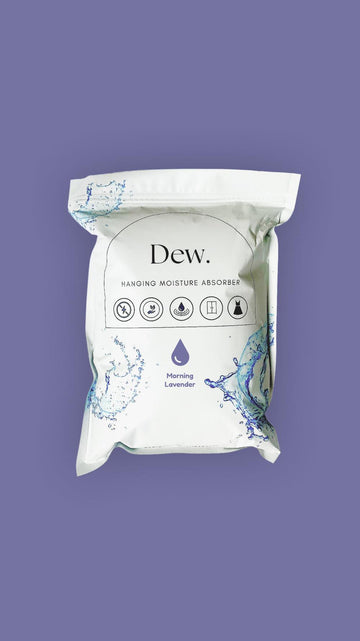
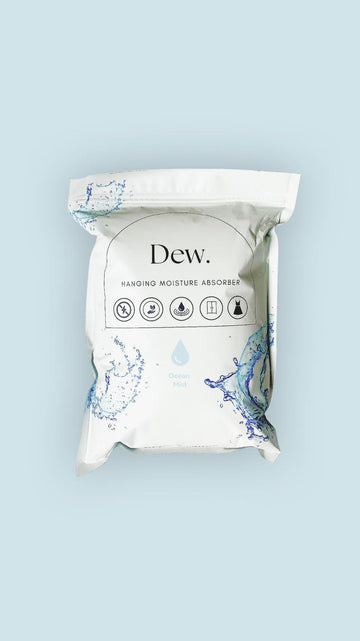
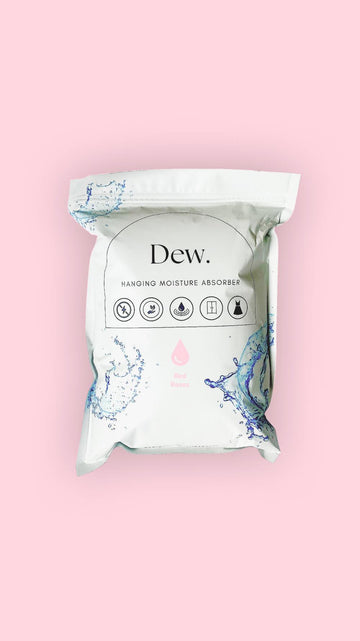
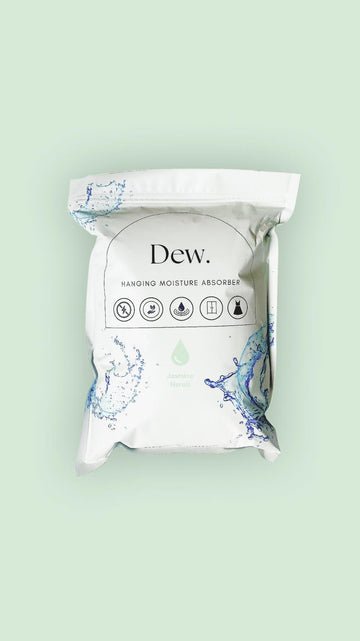
The right tool for apartment moisture. Dew.'s hanging moisture absorbers are perfectly suited for apartments — compact, chemical-free, and effective at keeping small wardrobe and cupboard spaces fresh and mould-free for up to 60 days.


