





Mould in the laundry room — the room that fights you back
by Kath P on May 19, 2026
Why laundries are mould-prone
Laundries are the most mould-prone room in most Australian homes because they combine all four risk factors at once: high humidity from the washing machine and dryer, fabric (hampers full of damp clothes) that holds moisture against walls, poor ventilation in compact internal laundries, and warm temperatures from the appliances themselves. It is the perfect storm of conditions, packed into the smallest room in the house.
The usual mould hotspots in a laundry
- Around the washing machine door seal — black mould on rubber gaskets is almost universal
- Behind the washing machine where steam condenses on the wall
- Inside the detergent drawer
- Under the laundry sink
- Inside the dryer lint trap if not cleared every load
- The hamper itself — wicker, fabric or plastic
Washing machine maintenance that prevents mould
- Leave the door open between washes. The single most important habit.
- Wipe the door seal dry after the last wash of the day.
- Run a hot empty cycle with a cup of vinegar every month.
- Pull the detergent drawer out and clean it monthly — gunky residue traps moisture.
- Don't leave wet clothes in the machine longer than an hour after the cycle ends.
Dryer-specific issues
Vented dryers (older style, where a hose pumps moist air into the room) are the worst contributor to laundry humidity. Heat-pump and condenser dryers extract the water into a tank you empty — far better for the room. If you have a vented dryer, run the hose outside through a wall vent. If that's not possible, run the dryer only with the door open and a fan moving air. Better still, replace it at next opportunity.
The hamper question
A closed wicker or fabric hamper full of damp gym clothes is a 24-hour mould factory. Move to a slatted or mesh hamper that lets air through. Empty fully every 3–4 days, not just the visible items at the top. If clothes go in genuinely wet (after the rain, after a workout), hang them to dry first rather than dropping them straight in.
Where to put a moisture absorber in the laundry
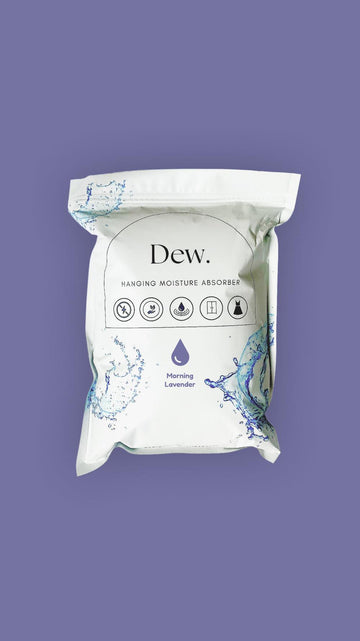
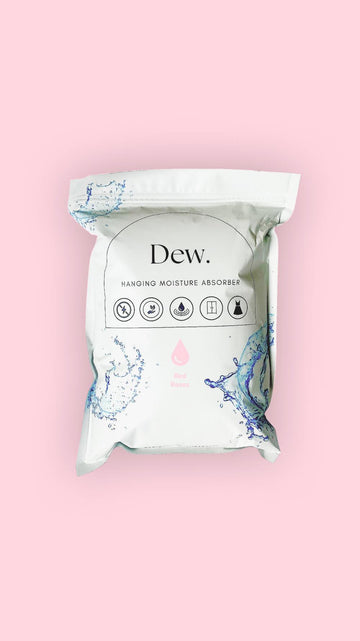
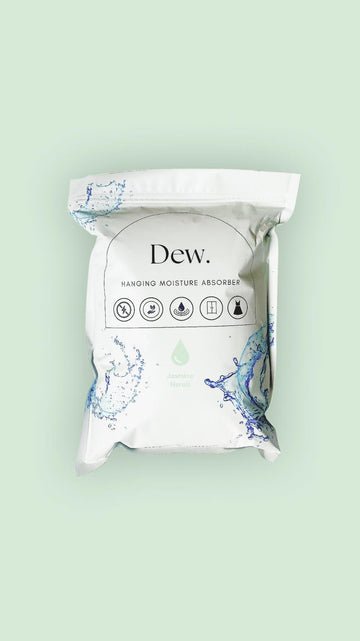
A Dew pouch in the laundry has high leverage because of the room's compact volume. Hang one on the back of the door or above the washing machine, where the moisture concentrates. Ocean Mist is the right scent for laundries — the fresh marine profile matches the clean-laundry expectation without competing with detergent fragrance.
If mould has already appeared
Surface mould on hard surfaces (tiles, painted walls, appliance exteriors) cleans off with a vinegar solution and a stiff brush. Mould on porous surfaces — plasterboard, gyprock ceiling, fabric — needs more serious treatment and often a professional. Either way, treat the cause as well as the symptom: ventilation, leaving doors open, and adding passive absorption.
Related reading
- How to dry clothes inside without creating moisture problems
- What causes mould in homes?
- Apartment moisture — small-space solutions
Protect your laundry room from excess moisture. Dew.'s hanging moisture absorbers are designed for exactly these conditions — they absorb excess humidity quietly, preventing mould from taking hold in damp, high-use spaces.
About the author: Kath P is a writer and researcher covering indoor mould, humidity and environmental health at The Dew. Journal. Her work draws on WHO guidelines, peer-reviewed research and the real-world experiences of Australian homeowners and renters.


