



How to dry clothes inside without creating moisture problems
by Kath P on May 19, 2026
Is it bad to dry clothes inside?
Drying clothes inside is not bad on its own — millions of Australians do it through winter and during long humid stretches with no problem. It becomes a problem when the moisture released by drying clothes has nowhere to go. A single load of wet washing puts up to two litres of water into the air over a few hours. Without ventilation, that water lands on walls, windows and wardrobes.
The three indoor-drying rules
- Dry in one dedicated room — usually the laundry, bathroom or a spare room — and close its door to the rest of the house.
- Open a window in that room. Even five centimetres is enough to let moisture escape rather than accumulate.
- Move air with a fan or the bathroom exhaust fan. Still air saturates fast; moving air carries moisture out.
Where not to dry clothes inside
Bedrooms are the worst spot. Eight hours of sleep with damp clothes hanging in the room raises humidity, encourages condensation on windows and walls, and contributes to morning congestion. Living rooms are second-worst — they tend to have closed doors, fabric furniture and the lowest ventilation of any room people use daily. Save these rooms for use, and dry clothes elsewhere.
Drying racks vs the dryer
A dryer is the safer choice for indoor weather if you have one, especially a condenser or heat-pump model that captures the water rather than venting it into the room. Drying racks work but they require the airflow rules above. Old-school vented dryers that pump moist air into the laundry are the worst of both — high running cost and high indoor humidity.
What to do once the clothes are dry
Move dry clothes out of the drying room within an hour of being ready. Clothes that sit folded against each other in a damp room reabsorb humidity and end up smelling musty in the wardrobe two days later. Air them open for thirty minutes before storing, and check the wardrobe itself has airflow and a moisture absorber if you live somewhere humid.
Apartment-specific tactics
- Use the bathroom as the drying room — it usually has the best exhaust fan in the apartment.
- Run the fan for the full drying duration, not just during showers.
- If you have no balcony, an over-bath drying frame keeps wet clothes contained to one room.
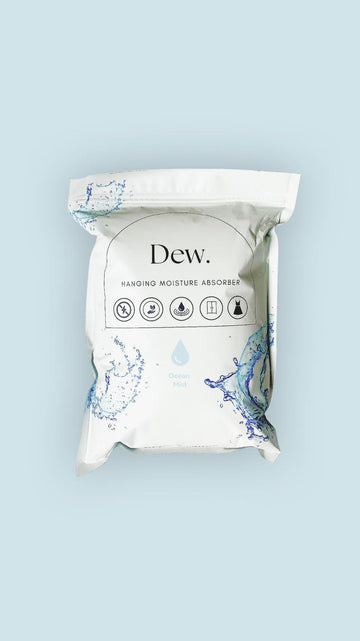
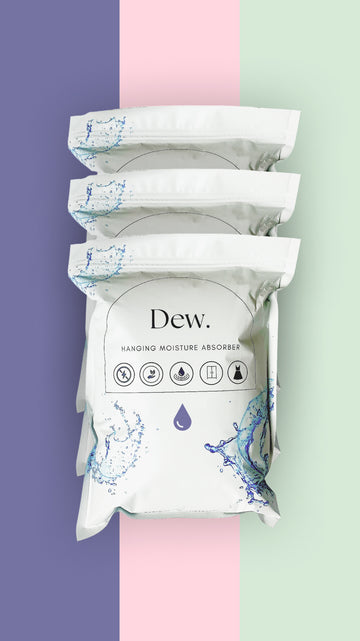
- Add a Dew Ocean Mist pouch in the bathroom — it handles the residual moisture between drying loads.


