


Why does my pantry feel humid?
Pantries feel humid because they sit beside ovens, dishwashers and kettles — three of the highest moisture sources in any home — and are usually closed for most of the day. The air inside a pantry takes on whatever the kitchen produced during cooking and then holds it. The result is dry goods that absorb moisture and lose freshness faster than they should.
What humidity does to pantry staples
| Item | What humidity does | Sign it's affected |
|---|---|---|
| Flour, sugar, rice | Clumps; loses leavening power | Hardened lumps in the bag |
| Spices and dried herbs | Loses aroma; clumps | Faded smell when opened |
| Pasta | Absorbs moisture; cooks unevenly | Sticky when boiled; longer cooking time |
| Crackers and cereal | Goes stale fast | Loss of crunch within days of opening |
| Coffee beans | Stales; loses oils | Flat-tasting brew |
| Honey, syrups | Ferments over time | Cloudiness or bubbles |
The basic pantry rules
- Decant flour, sugar, rice and pasta into airtight containers within a few days of opening.
- Keep spices in jars rather than bags. Out of direct sunlight.
- Don't put the pantry directly beside the oven if you have a choice of layout.
- Open the pantry door for a few minutes after cooking — let the humid kitchen air swap for drier air from the rest of the house.
- Once a month, take everything out, wipe down shelves, and check for any items past their prime.
Should I use a moisture absorber in the pantry?
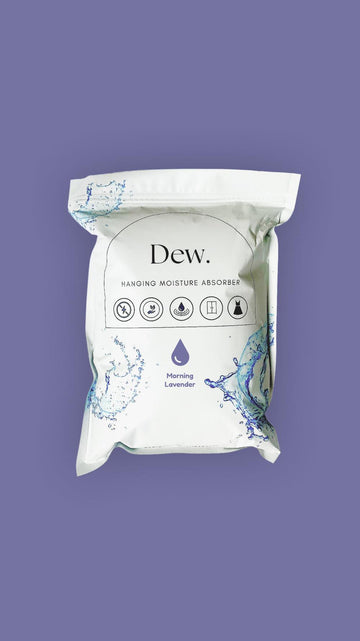
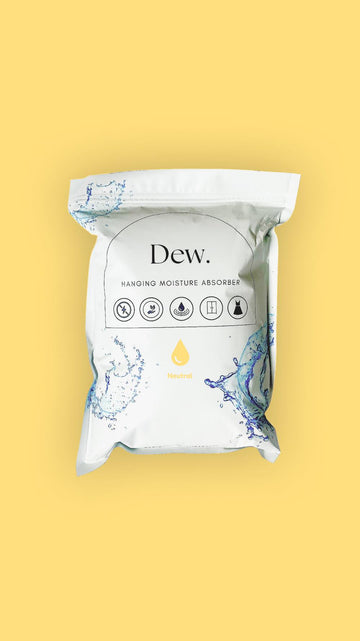
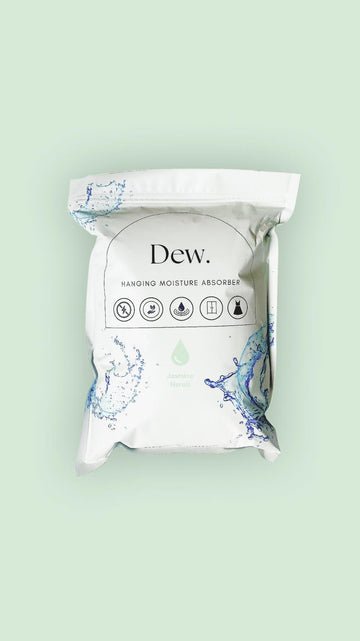
Yes — a small one. The Dew Neutral pouch suits the pantry well because it carries no fragrance to transfer to food. Hang it on the back wall of the pantry, well away from any direct food contact. The pouch handles the post-cooking humidity surge that would otherwise settle into the dry goods on the lower shelves.
What about silica gel sachets in containers?
The little silica sachets you find in seaweed packets or vitamin bottles are safe to reuse inside airtight containers of dry goods. One sachet per kilo of flour, sugar or pasta keeps the contents drier and extends shelf life by months. Don't use the food-grade calcium chloride from a moisture absorber inside food containers — it's safe in normal contact but not meant for direct food contact.


