


How Sydney humidity affects your wardrobe — and what to do about it
by Dew. on May 19, 2026
Sydney is one of Australia's most beautiful cities — and one of its most humid. Positioned on the coast with a temperate climate that produces warm, wet summers and mild winters, Sydney homes deal with moisture intrusion almost year-round. If you have ever opened your wardrobe after a long weekend away and been hit by a musty smell, or found your leather shoes have developed a white surface bloom, you have experienced Sydney's humidity problem first-hand.
Sydney's humidity profile
Sydney's average relative humidity hovers between 60% and 70% throughout the year, with summer months (December through February) regularly exceeding 80% during and after rainfall. The city's coastal position means onshore winds bring moisture-laden air inland on a daily basis. Even on sunny days, background humidity is high enough to affect enclosed spaces like wardrobes, storage rooms, and garages.
Sydney's eastern and northern suburbs, closest to the coast, experience the highest humidity. But western suburbs are not immune — they experience their own humidity challenges during summer thunderstorm season, when warm, humid air from the coast moves inland ahead of storm fronts.
Where Sydney's humidity hides in your home
Sydney's humidity problem is particularly pronounced in older homes common in inner-city suburbs like Newtown, Surry Hills, Paddington, and Leichhardt. These homes were built before modern damp-proofing standards and often have poor wall insulation, minimal subfloor ventilation, and bathrooms that share walls with wardrobes or bedrooms.
In newer homes and apartments, tightly sealed double-glazed construction keeps outdoor air out — but also traps the moisture generated by daily activities inside. A family of four generates several litres of water vapour per day through cooking, showering, breathing, and drying laundry. In a sealed modern apartment without adequate mechanical ventilation, this moisture accumulates in the air and settles into enclosed spaces.
What sustained humidity does to your belongings
In Sydney's climate, the effects of wardrobe humidity are cumulative and often go unnoticed until damage is already done. Wool and natural fibre garments absorb atmospheric moisture and can begin to smell musty even without visible mould. Leather shoes, bags, and belts grow white or green mould if left in a humid wardrobe for extended periods. Timber furniture and flooring swell and warp. Paper documents, books, and photographs in storage boxes deteriorate from humidity long before they would from dust alone.
How to reduce wardrobe humidity in a Sydney home
Ventilate regularly. Open windows when outdoor humidity is lower than indoor levels — typically on dry, breezy days. Even 15-20 minutes of cross-ventilation significantly reduces indoor moisture levels.
Use an exhaust fan in the bathroom. Sydney bathroom steam is one of the biggest contributors to whole-home humidity. Run the exhaust fan during and for at least 15 minutes after every shower, and keep the bathroom door closed to contain moisture.
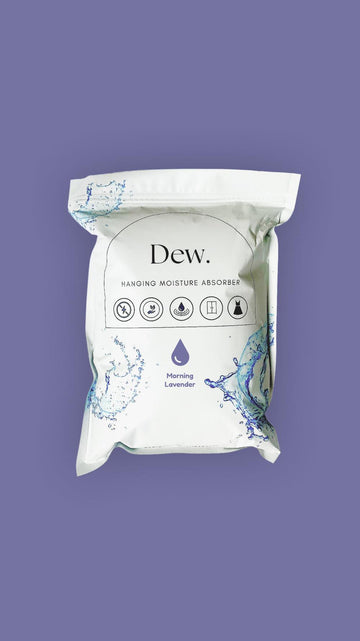
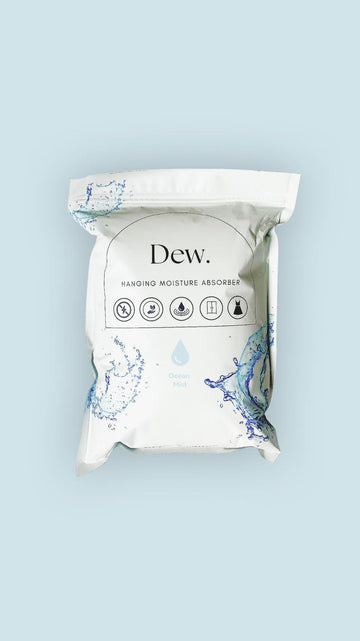
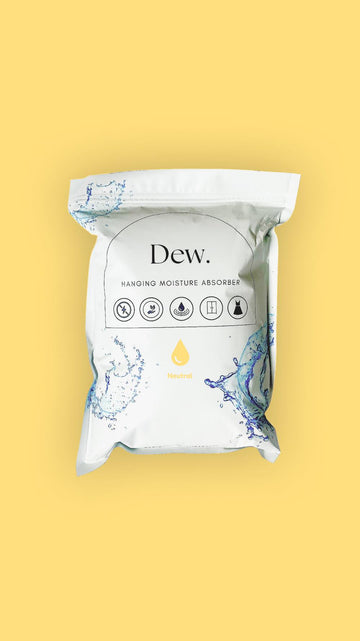
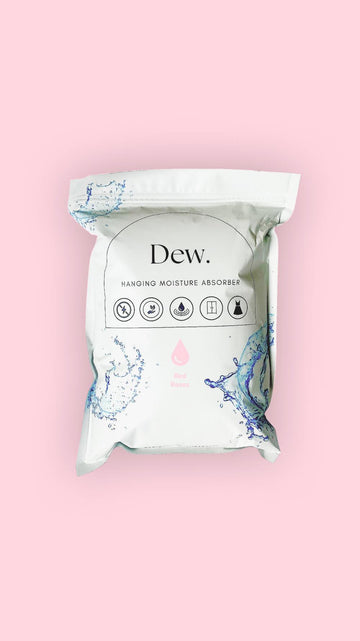
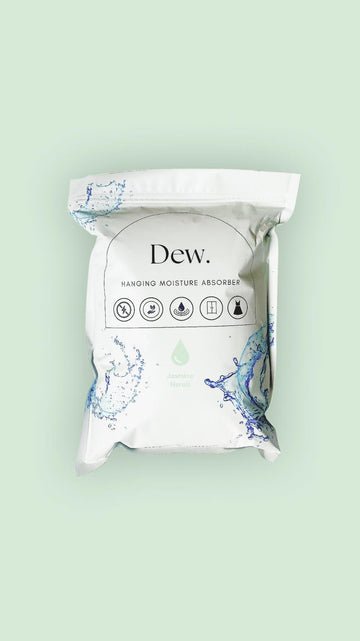
Place moisture absorbers in wardrobes and enclosed storage. This is the most direct way to protect your clothing and belongings. Dew.'s hanging moisture absorbers hang from your wardrobe rail and continuously draw moisture from the enclosed air space, keeping relative humidity at levels where mould cannot grow. They are particularly effective in Sydney's year-round humid climate — replace every 60 days for continuous protection.
Do not pack wardrobes too tightly. Airflow between garments significantly reduces the humidity levels within a wardrobe. Dense packing creates still-air pockets where moisture concentrates.
Store seasonal items properly. Bulky winter items (heavy coats, jumpers, boots) stored through Sydney's long warm season need to be completely clean and dry before storage. Even trace amounts of perspiration or moisture in stored garments can seed mould growth over months of storage.
Year-round moisture management in Sydney
Unlike Melbourne, where there is a clear winter mould season, Sydney's humidity challenge is consistent throughout the year. Summer brings high absolute humidity; winter brings rain and condensation. Spring and autumn are Sydney's driest periods — but even then, coastal humidity rarely drops low enough to dry out problem wardrobes naturally.
The most effective approach for Sydney homes is consistent, low-effort moisture management: passive desiccants in enclosed spaces, good ventilation habits, and attention to the moisture you introduce through daily activities.
Sydney's humidity is year-round — and so is the solution. Dew.'s hanging moisture absorbers provide continuous, passive protection for your wardrobe and stored belongings, whatever the season.


