


Humidity problems in Brisbane homes — and what to do about them
by Dew. on May 19, 2026
If you live in Brisbane, you already know the feeling: a wardrobe that smells musty even after a good clean, shoes that develop a white bloom after sitting untouched for a few weeks, or towels that never quite feel dry. That is humidity at work — and in South East Queensland, it is a persistent, year-round challenge.
Why Brisbane homes struggle with moisture
Brisbane sits in a subtropical climate zone with average relative humidity ranging from 50% to over 80% depending on the season. The city's wet season (October through April) brings not only rain but sustained periods of warm, moisture-laden air that permeates homes and enclosed spaces. Unlike Melbourne or Sydney, where humidity tends to spike during storms and then drop, Brisbane homes can go weeks at a time in conditions that are ideal for mould and mildew growth.
There are a few structural reasons Brisbane homes are particularly vulnerable. Older Queenslander homes are designed for ventilation — raised floors, wide verandahs, louvred windows — but their open construction also means outdoor humidity levels translate almost directly into indoor ones. Modern brick and concrete homes seal humidity inside: cooking, showering, and even breathing all add moisture to the air, and without adequate ventilation, it has nowhere to go. Limited heating use means Brisbane homes rarely get the incidental drying effect that running central heating provides in cooler climates.
Where moisture damage shows up first
In Brisbane homes, moisture damage typically first appears in enclosed, low-airflow spaces: wardrobes, pantries, under-bed storage, spare rooms with the door kept closed, and linen cupboards. Timber furniture swells and warps. Leather goods grow mould. Clothing stored in plastic bags — which many people assume is protective — actually traps moisture inside and accelerates damage.
Mould spores are present in virtually every home, but they only germinate and grow when relative humidity stays above approximately 60% for an extended period. In Brisbane's climate, enclosed storage areas routinely exceed this threshold.
Practical steps to reduce humidity in Brisbane wardrobes and storage spaces
You do not need to run a dehumidifier 24 hours a day to manage moisture in a Brisbane home. A combination of simple habits and targeted moisture-absorbing products can make a significant difference.
Improve airflow where possible. Leave wardrobe doors slightly ajar when rooms are not in use, and avoid overpacking shelves and hanging rails — airflow is your best passive defence against humidity build-up.
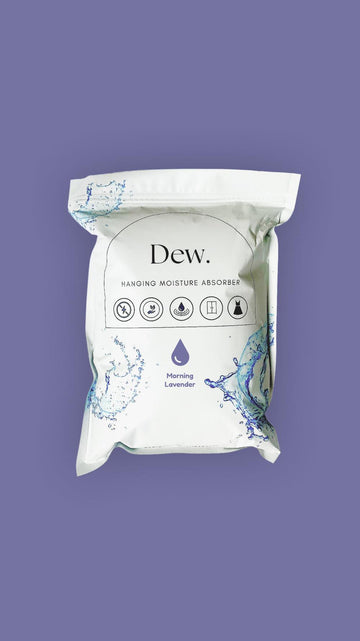
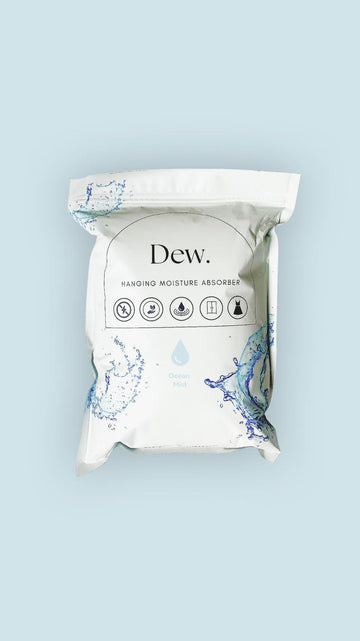
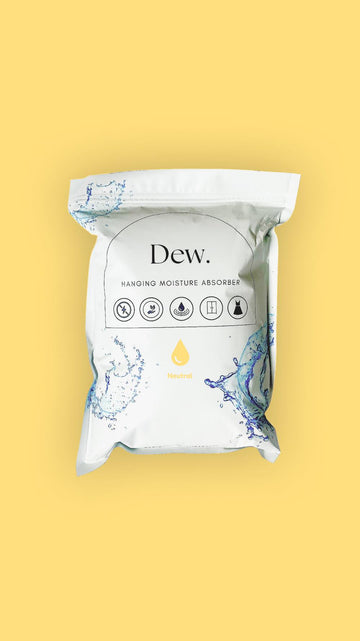
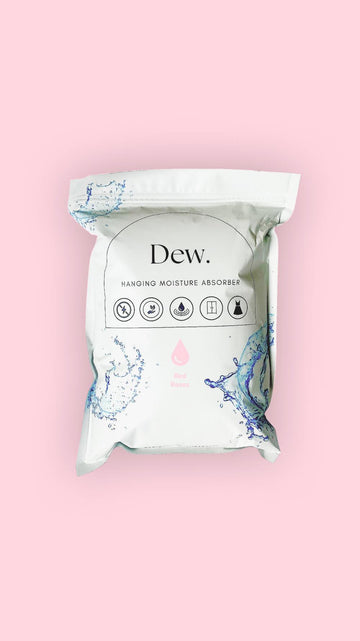
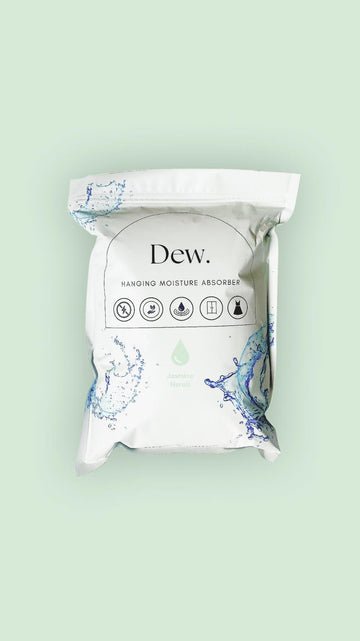
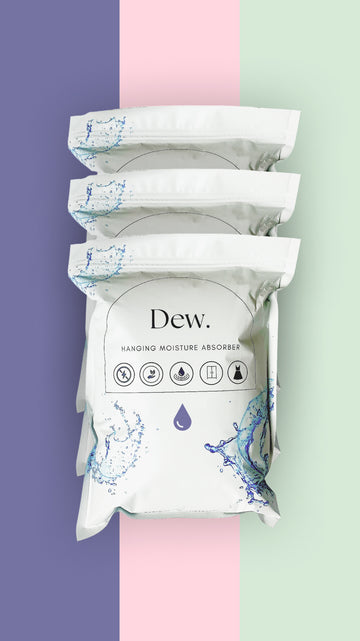
Use desiccant moisture absorbers in enclosed spaces. A hanging moisture absorber draws excess moisture out of the air in a contained space, reducing relative humidity below the threshold where mould can grow. Dew.'s hanging moisture absorbers are designed specifically for wardrobes and enclosed storage — they hang from the rail, take up no shelf space, and last around 60 days before needing replacement.
Do not store damp or recently washed items in enclosed spaces. Even clothing that feels dry to the touch can retain enough moisture to raise the humidity of a closed wardrobe significantly.
Run ceiling fans on low overnight. Even a gentle circulation of air prevents the stagnant, high-humidity micro-environments that form in poorly ventilated rooms.
A note on Brisbane's dry season
Brisbane's winter (June to August) is mild and often described as dry — but outdoor relative humidity still regularly sits at 50-60% during these months, and overnight temperatures drop enough to cause condensation on surfaces inside wardrobes and on exterior walls. Consistent moisture management year-round is more effective than reactive cleaning when mould appears.
Keep Brisbane's humidity out of your wardrobe. Dew.'s hanging moisture absorbers are a simple, effective way to protect your clothing and stored items year-round — no electricity, no cords, no maintenance.


