


Is household mould dangerous?
For most healthy adults, small amounts of household mould cause mild symptoms — a runny nose, watery eyes, occasional sneezing — and clear up once the mould is removed. For people with asthma, allergies, immune conditions, or for young children and older adults, mould exposure can cause more serious respiratory symptoms and is worth treating seriously. The honest answer is: it depends on how much, what kind, and who lives there.
What types of mould turn up in Australian homes?
Three are common. Cladosporium and Penicillium are the green, blue and grey mould species that grow on walls, around windows, and inside wardrobes — generally low-risk, easy to clean. Aspergillus is more variable, and some species can cause respiratory illness in vulnerable people. Stachybotrys (often called 'black mould') is rarer in homes but more serious — it needs persistent moisture to grow and usually points to a structural problem like a long-term leak.
How to tell if mould is affecting your health
If you wake up congested in a particular room, develop a cough that improves when you leave the house, or notice your asthma is worse since moving in, mould is worth investigating. Test by spending a weekend away from the home — if symptoms ease and return when you come back, the home is involved. Talk to your GP and consider a professional mould inspection.
When to clean mould yourself
Patches smaller than A4 on hard, non-porous surfaces — tiles, painted walls, glass — can be cleaned safely with a vinegar solution and a stiff brush. Wear gloves, open windows, wear a basic dust mask, and dispose of cleaning cloths in a sealed bag. Always fix the moisture source afterwards or the mould returns.
When to call a professional
- Any patch larger than A4
- Mould on porous surfaces — plasterboard, carpet, ceiling materials
- Mould that returns within a month of cleaning
- Visible black mould, especially around plumbing or windows
- Anyone in the household with asthma, allergies or immune compromise
- New babies, young children or older adults living in the home
How to keep mould out long-term
Once mould is removed, the work is in keeping the conditions wrong for its return. That means controlling humidity, fixing leaks promptly, ventilating consistently and using passive moisture absorbers in any space that does not dry out on its own. Mould prevention is mostly small daily habits, not occasional big cleans.
Related reading
- What causes mould in homes?
- How to test the humidity in your home
- The slow cost of leaving moisture alone in your home
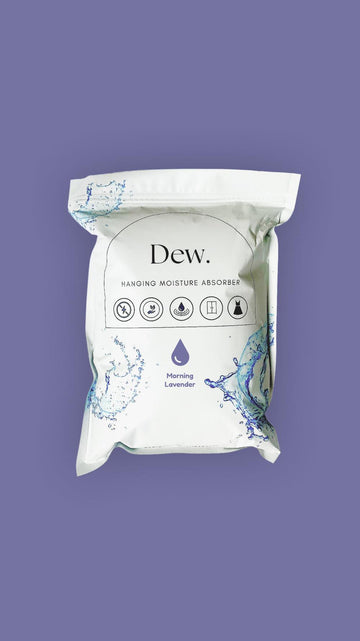
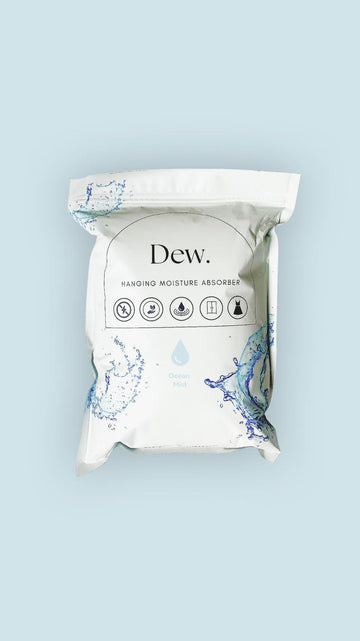
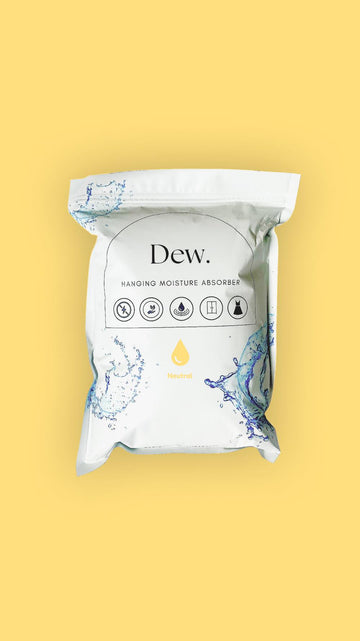
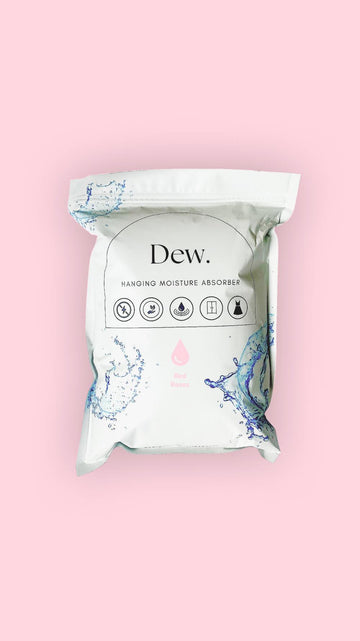
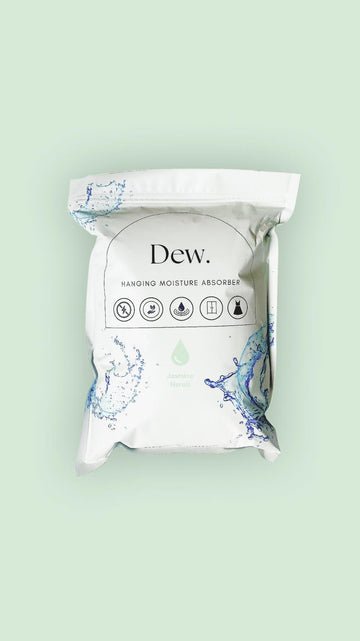
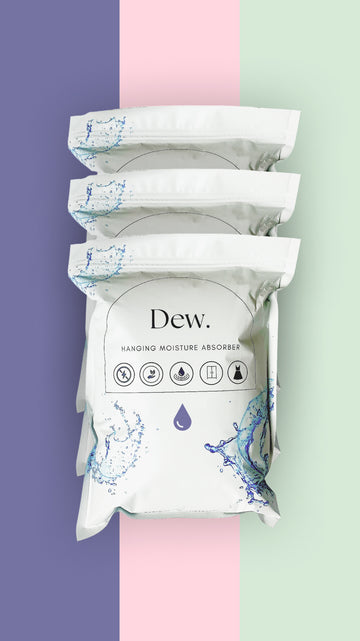
Take action against mould before it becomes a problem. Dew.'s hanging moisture absorbers reduce the excess humidity that mould needs to grow — protecting your wardrobes, linen and clothing without chemicals.


