






Why books grow mould and mildew
Books grow mould because paper is essentially compressed plant fibre held together with sizing — the perfect food source for fungi when the air around them stays humid. The brown spots that appear on older book pages (called 'foxing') are early-stage fungal activity. The musty smell of a second-hand bookshop is the same chemistry, decades in.
The three conditions books need to stay fresh
- Humidity below 60%, ideally between 40% and 55%
- Temperature below 25°C — heat accelerates everything
- Air movement — books packed tightly against each other without space trap humidity in the spines
How to store books at home
- Leave a finger's width of space between groups of books, even on a packed shelf.
- Don't stack books flat permanently — the bottom books trap humidity. Upright storage is better for everything except very heavy art books.
- Keep books away from external walls, particularly south-facing walls in Sydney/Melbourne or north-facing walls in tropical Queensland.
- Avoid storing books in plastic boxes long-term. Cardboard breathes; plastic traps humidity.
- Dust the tops of books quarterly — dust holds moisture against the page edges.
Where a moisture absorber helps
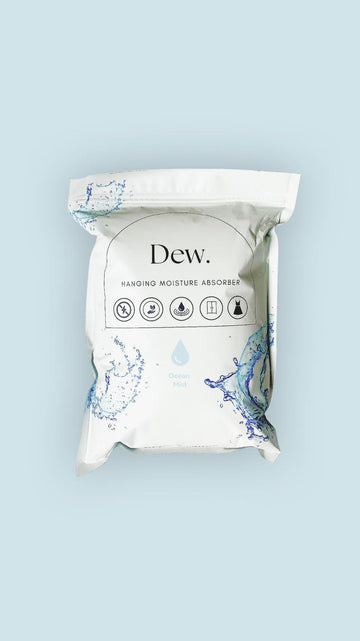
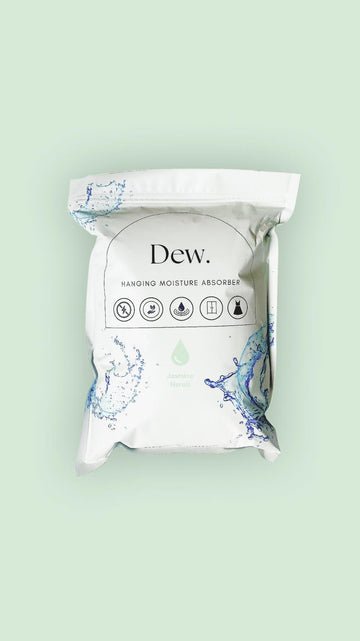
A Dew Neutral pouch suits a home library well — placed on the top shelf of the bookcase, it draws humidity out of the surrounding air without any fragrance that could transfer to paper. For a single shelf of valuable or sentimental books, a small silica gel pack inside a glass-fronted cabinet adds a second layer of protection.
Old books, family photographs and documents
These need more care than current reading material. Store in acid-free archival boxes if you can afford them ($30–$60 per box from craft stores), in a closed cupboard rather than open shelving, in a room you keep below 55% humidity. Photographs in particular should never be stored in sticker albums with adhesive pages — the adhesive degrades, the photos stick, and humidity accelerates both.
What to do with a musty book
Take it outside on a dry day. Stand it open on a clean surface for a few hours in indirect sunlight. Brush the page edges and spine gently with a soft brush. For a stubborn musty smell, seal the book in a paper bag with a handful of baking soda for a few days. Don't store the book back among others until the smell is gone — books are unfortunately good at sharing mustiness with neighbours.


