




Renters and mould: your rights, your landlord's obligations, and how to protect yourself
by Kath P on May 28, 2026
Mould in a rental home sits in one of the more frustrating intersections of Australian life: it's a genuine health issue, it's legally complex, and it's often the tenant who ends up managing it while the landlord moves slowly. Understanding where the law sits — and how to document your situation properly — makes a significant difference to how this plays out.
The legal baseline across Australia
In Australia, landlords carry a general legal obligation to ensure that rental properties are provided in a reasonable state of cleanliness and are fit for habitation. This obligation is embedded in residential tenancy legislation across all states and territories:
- NSW: Section 52(1) of the Residential Tenancies Act 2010 requires the landlord to provide premises that are fit for habitation, and Section 63 requires them to maintain the premises in a reasonable state of repair
- Queensland: the Residential Tenancies and Rooming Accommodation Act 2008 similarly requires premises to be fit for the tenant to live in
- South Australia: rental properties must be reasonably free from mould or other irritants, and reasonably free from the adverse effects of moisture or damp
- Victoria: the Residential Tenancies Act 1997 requires premises to be maintained in good repair and fit for habitation
The bottom line: if mould is making a property unfit to live in, the landlord is legally required to act.
Who is responsible for what?
Responsibility for mould in a rental property depends on its cause — and this is where most disputes begin.
The landlord is generally responsible when mould results from structural issues: a leaking roof, faulty plumbing, inadequate or broken ventilation, poor waterproofing, or gutters that haven't been maintained. These are defects in the property itself.
The tenant may share or bear full responsibility when mould has developed because of behaviour: not using the bathroom exhaust fan, drying washing indoors without ventilation, failing to report a known leak, or leaving condensation to accumulate on surfaces over time.
In practice, many cases are shared — the building has inadequate ventilation and the tenant's behaviour has accelerated the problem. How this gets resolved usually depends on the evidence available and which party documents things first.
What to do if you find mould in your rental
Report it in writing, immediately
Notify your landlord or property manager in writing — email is ideal — the moment you identify mould. Describe what you've found, where it is, and any structural issues you believe may be contributing (dripping pipe under the sink, broken exhaust fan, etc.). Keep a copy of everything.
Document with photos and dates
Photograph every affected area with timestamps. Note the room, the surface, the approximate size of the patch. If the mould grows or spreads before the landlord responds, document that too.
Keep records of every interaction
If your landlord acknowledges the issue verbally, follow up with a written summary: 'As discussed on [date], I've reported mould in the bathroom...' This becomes evidence if you need to escalate.
Know your escalation options
If a landlord fails to act after proper written notice, tenants in most Australian states can escalate to the relevant tribunal — NCAT in NSW, VCAT in Victoria, QCAT in Queensland. In extreme cases where mould makes the property wholly or partly uninhabitable, NSW law allows for immediate termination of the tenancy under Section 109 of the Residential Tenancies Act. Equivalent provisions exist in Queensland and Victoria.
What tenants can do in the meantime
While you wait for your landlord to act on structural issues, you can reduce your own exposure: ventilate every room thoroughly, use a dehumidifier to keep humidity below 60%, avoid drying laundry indoors without airflow, and — for small patches on hard surfaces — clean with an appropriate mould remover. For anything beyond a small patch, professional remediation is the right call, and the cost question should go back to your landlord in writing.
Control what you can control while you wait
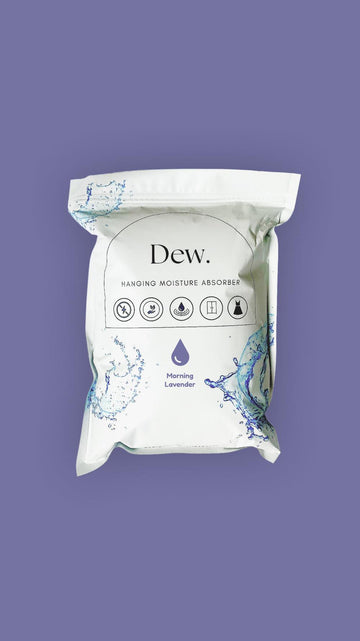
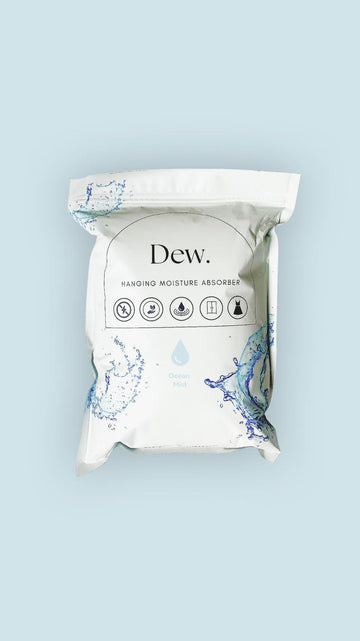
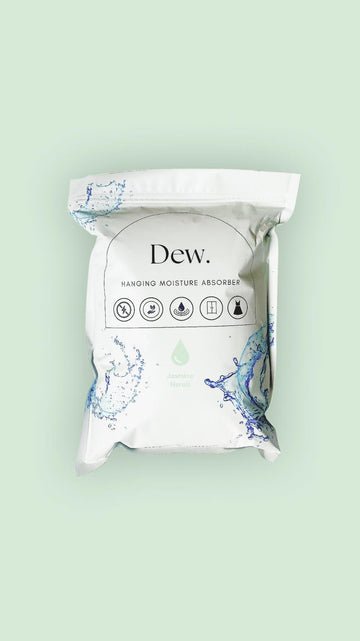
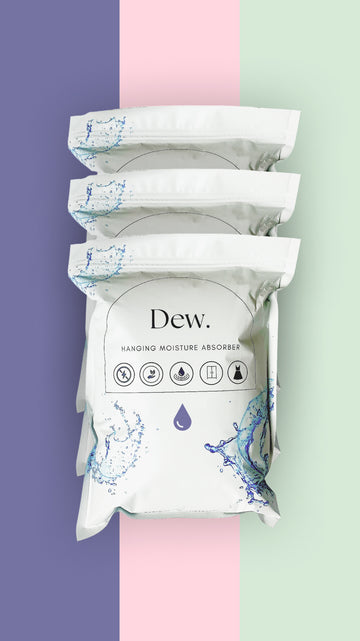
A Dew Moisture dehumidifier keeps indoor humidity in the safe zone, slowing mould growth while structural issues are being resolved. It's not a substitute for a proper fix — but it helps protect your health in the meantime. Browse the range.
About the author: Kath P is a writer and researcher covering indoor mould, humidity and environmental health at The Dew. Journal. Her work draws on WHO guidelines, peer-reviewed research and the real-world experiences of Australian homeowners and renters.


