


Asthma is one of those conditions where the environment quietly does half the work. You can take your preventer every morning, avoid your known triggers, and still find yourself reaching for the reliever at 3am. If that's been you, especially during humid stretches or after a rainy week, your home's moisture levels are worth a hard look.
Why humidity matters before mould even appears
Mould needs moisture to grow. That's not a slogan — it's the entire game. The WHO's indoor air quality work points to a fairly clean threshold: keep indoor relative humidity below the range where mould reliably thrives, and you starve the problem at its source. Most building science work lands on roughly the same range: aim for 40–50%, and definitely avoid prolonged stretches above 60%.
Dust mites — another major asthma trigger — work on the same principle. They need humidity above about 45–50% to multiply. So the same indoor humidity range that prevents mould also keeps dust mite populations in check. Two of the biggest indoor asthma triggers, one solution.
What the asthma research actually says
A 2015 review by Kanchongkittiphon and colleagues, updating an earlier Institute of Medicine review, concluded that dampness and dampness-related agents were causally related to asthma exacerbation in children, and associated with asthma exacerbation in adults. That's a strong statement in the careful language of medical literature.
The same review found limited but real evidence that higher indoor concentrations of certain fungi (especially Penicillium species) were associated with asthma flare-ups.
A more recent meta-analysis combining 21 case-control and 11 cohort studies on children found that mouldy homes increased asthma risk by 53% in case-control data and 15% in cohort data — both statistically significant, both pointing the same direction.
Why mould makes asthma worse, mechanically
Mould affects asthmatic airways in a few overlapping ways:
- Spores act as allergens that trigger immune responses in sensitised people
- Fragments of mould and the chemicals it produces irritate airway linings even in non-allergic people
- Mould releases volatile organic compounds (that musty smell) that can trigger reactive airways
- Living mould produces mycotoxins on some surfaces, adding to the inflammatory load
Sensitisation to moulds — particularly Alternaria and Aspergillus — has been identified as a powerful risk factor for severe asthma in adults. A multi-centre European study of more than a thousand asthmatic adults flagged mould sensitisation as one of the stronger predictors of severe disease.
The remediation upside
Here's the part that should give every asthmatic hope: dampness remediation studies in adults consistently show roughly a 40% reduction in respiratory and asthma outcomes, including reduced asthma medication use. That includes things like fixing leaks, drying out water-damaged areas, improving ventilation and — critically — controlling indoor humidity.
That's not a marginal change. That's the kind of result we associate with introducing a new medication, except this one happens by removing something rather than adding it.
Practical humidity targets
If you take nothing else from this:
- Aim for 40–50% indoor relative humidity
- Never let it sit above 60% for long stretches
- Pay extra attention in winter (condensation) and in muggy summer weeks
- Watch the rooms with the least ventilation — bathrooms, laundries, bedrooms with the door closed all night
A decent hygrometer costs around $20 and removes all the guesswork. From there, a dehumidifier is the cleanest way to actually hold those numbers steady, day in and day out.
Take humidity out of the equation
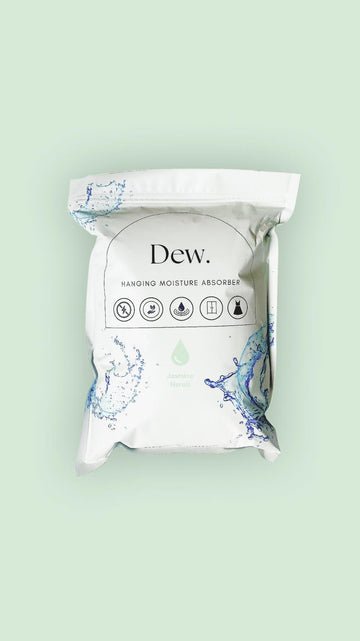
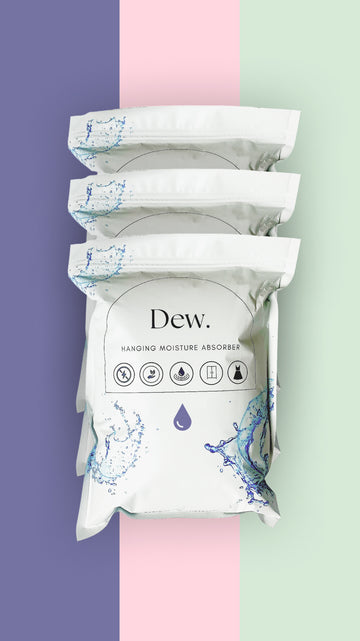
Dew Moisture dehumidifiers are designed to hold your indoor humidity in the safe zone automatically — so your asthma plan isn't fighting your home. Explore our range.
About the author: Kath P is a writer and researcher covering indoor mould, humidity and environmental health at The Dew. Journal. Her work draws on WHO guidelines, peer-reviewed research and the real-world experiences of Australian homeowners and renters.


