



Your leather jacket deserves better: how humidity quietly destroys leather outerwear
by Kath P on May 28, 2026
A good leather jacket is one of the few clothing purchases that genuinely gets better with age — if you look after it. The patina that develops on well-maintained leather is part of what makes it worth owning. But there's a version of ageing that nobody wants: the slow, invisible damage done by a wardrobe that's too humid.
Mould on leather jackets is more common than most people realise, and the damage is more serious than a quick wipe-down can fix. Here's what's actually happening when humidity does its work on leather outerwear.
How mould gets into a leather jacket
Leather is a porous, organic material. After a day of wear, it holds more than just the memory of the shape of your body — it holds moisture from perspiration, natural oils from your skin, and any environmental humidity it absorbed in transit. The organic residue that builds up with regular wear provides exactly the nutrients that mould spores need to colonise.
When a jacket goes into an enclosed wardrobe without proper drying — or into a sealed garment bag, which traps rather than disperses moisture — the conditions tip toward fungal growth. Leather stored in humid environments absorbs moisture from the air. Basements, poorly ventilated closets, and coastal homes are common problem environments. The damage doesn't need a dramatic single event. It happens gradually, quietly, in the dark.
What mould does to leather outerwear
The early signs are easy to miss or dismiss: a faint musty smell when you open the wardrobe, white or greyish speckling along the seams or collar, a slight tackiness to the surface. By this point the mould has already been active for some time.
Left untreated, mould does not stay on the surface. Leather restoration specialists consistently note that mould gradually degrades leather fibres, weakens stitching, discolours finishes and can permanently compromise a jacket's structural integrity. The stitching along the seams and the areas where the leather is thinnest — collar, cuffs, panel joins — are typically the first to show real damage.
For premium leather jackets — full-grain cowhide, Italian nappa, lambskin — the material itself is the point. Structural degradation isn't just an aesthetic problem; it changes how the jacket moves, drapes and ages from that point forward.
Seasonal storage: the highest-risk moment
Mould on leather jackets most often occurs during seasonal storage — the months when the jacket is packed away and not being regularly aired out through use. A jacket stored at the end of summer, potentially holding humidity absorbed during the season, left in an airless wardrobe through the damp months of autumn and into winter, faces a long exposure window where conditions may be ideal for mould growth for weeks at a time.
The Leather Repair Company, which works with garments affected by mould, notes that leather jackets put away into wardrobes after long periods of wear and storage are among the most common items they see with mould damage — particularly when the wardrobe is packed tightly enough to prevent airflow between items.
Prevention is straightforward
Ensure the jacket is clean and fully dry before storage. Use a breathable garment cover rather than a plastic bag. Don't pack the wardrobe so tightly that air can't move between garments. Condition the leather before long-term storage to maintain its moisture balance and close micro-fissures where spores can take hold.
And control the humidity in the space where it's stored. Aim for 50–55% relative humidity. At that level, mould cannot establish itself. Everything else you do for your leather is working in support of that number.
Your jacket. Protected.
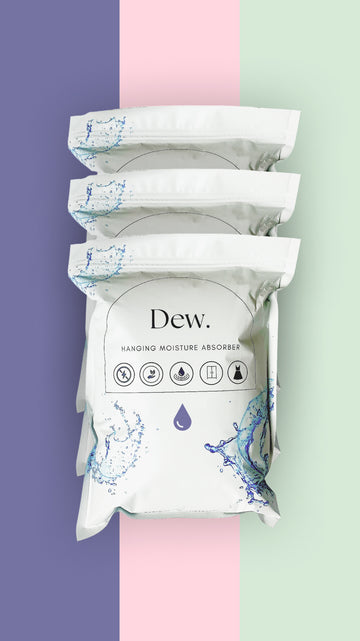
Dew Moisture dehumidifiers hold your bedroom and wardrobe in the humidity range where mould simply can't grow. Quiet, low-maintenance, and sized for every space. Browse the range and stop the damage before it starts.


