


Mould and fashion: protecting your designer clothing investment
by Kath P on May 28, 2026
The conversation about humidity and mould tends to focus on leather — and with good reason, since leather is particularly susceptible. But the wardrobe hanging next to your leather pieces is at risk too. Designer clothing — silk, wool, cashmere, brocade, embellished pieces, vintage finds — is vulnerable to moisture damage in ways that are less immediately dramatic than mould on a Birkin, but just as real and often just as costly.
If you've invested seriously in your wardrobe, the environment it lives in deserves the same attention you give to the clothes themselves.
What high humidity does to fabric
Moisture in the air affects different fabrics differently, but the direction is always the same: it accelerates deterioration.
- Natural fibres — silk, wool, cotton, cashmere — are hygroscopic, meaning they absorb water from the air. In persistently humid conditions, absorbed moisture creates the conditions for mould, mildew and the bacterial activity that produces musty odours. Wool and cashmere are particularly vulnerable; the natural oils in the fibre provide both a moisture conduit and a food source for microorganisms.
- Dyes in saturated or humid conditions can migrate — causing colour bleed onto adjacent garments. A dark silk blouse stored next to a pale piece in a humid wardrobe can transfer dye. This is the same mechanism that causes a dark leather bag to stain clothing during a humid commute.
- Embellished pieces — beaded, sequined, embroidered — carry adhesives and metallic threads that corrode, loosen and tarnish in humid conditions. The moisture degrades both the adhesive bond and the metal.
- Vintage and archival pieces are especially fragile: fibres that have already aged and weakened are further damaged by the swelling and contraction that humidity cycles cause.
Mould on fabric: it's not just a smell
Mould on fabric is different from mould on leather — it grows faster, spreads further and is harder to remove completely. Unlike leather, which has a dense surface that mould grows across, fabric offers depth: mould can establish itself within the weave, making surface cleaning inadequate. The result is often permanent staining and a smell that professional dry cleaning reduces but doesn't always eliminate.
Research on textile preservation — from museum conservation studies — consistently finds that maintaining humidity below 55% is a foundational requirement for preventing mould, mildew and the full spectrum of humidity-related deterioration in stored garments. The same principles that conservators apply to irreplaceable archival textiles apply to the garments in your wardrobe.
The wardrobe as a microclimate
A walk-in wardrobe or built-in robe is not just a storage space — it's an enclosed environment with its own temperature and humidity, often less ventilated than the adjacent room. In coastal Australian homes, during humid seasons, or in rooms without adequate airflow, wardrobe humidity can sit meaningfully higher than the rest of the house.
Overcrowded wardrobes compound the problem: packed garments prevent air circulation, and moisture absorbed by one piece can migrate to adjacent items. The garment at the back of the rack, the one you haven't worn since last season, is the one that develops the problem first.
What serious collectors do
People who care for significant fashion collections — collectors, stylists, wardrobe specialists — treat climate control as non-negotiable. The guidelines are consistent: 50–55% relative humidity, stable temperature, adequate airflow, breathable garment covers (not plastic), regular rotation so no piece sits untouched for too long.
Active humidity control — a dehumidifier in the wardrobe space or adjacent bedroom — is the most reliable way to hold those conditions. Everything else is good practice working inside a controlled environment.
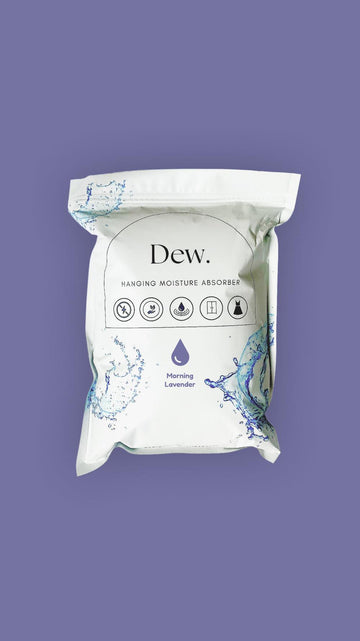
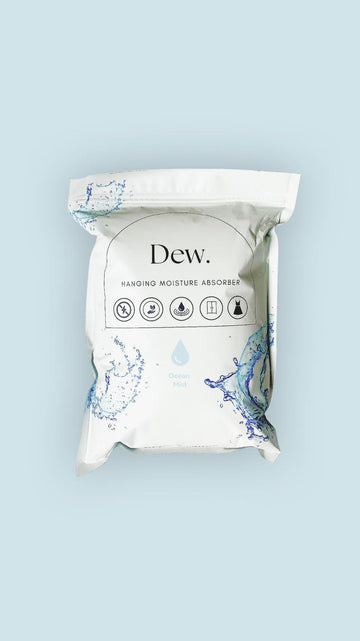
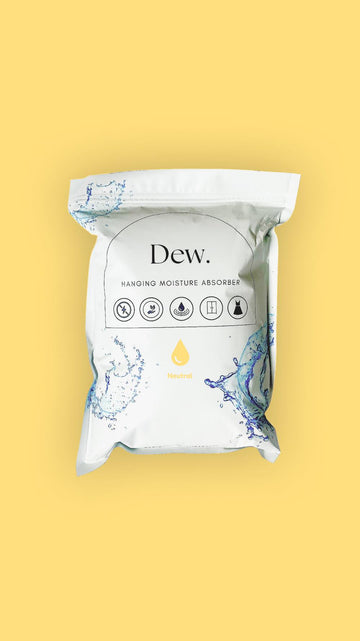
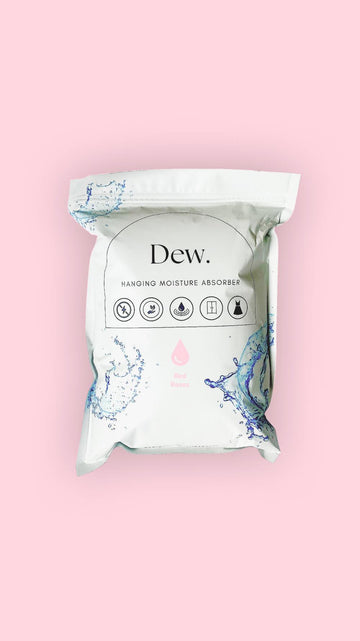
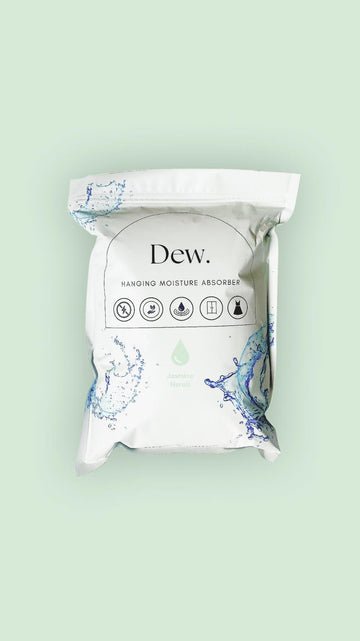
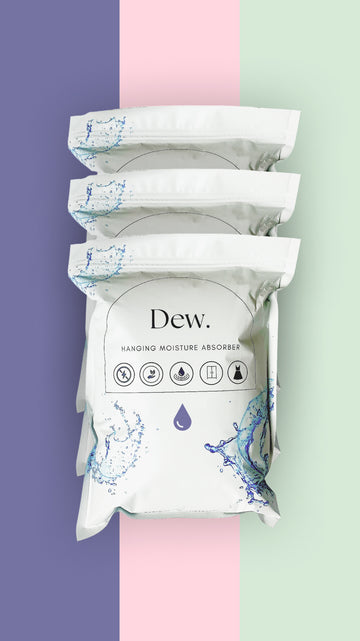
Protect your whole wardrobe — browse Dew Moisture
From leather to cashmere, the right humidity makes the difference. Find the unit that's right for your space.


