


How to Stop Mould Growing on Clothes in Humid Australian Homes
by The Dew Team on Jun 12, 2026
The quickest way to stop mould growing on clothes in humid Australian homes is to keep wardrobe humidity below 60%, dry clothes completely before storing them, and use a moisture absorber in every enclosed wardrobe and storage space. Mould doesn't grow without moisture — if you can break the moisture cycle, you've solved the problem.
Why mould thrives in Australian homes
Australia's coastal cities are some of the most humid major cities in the world. Sydney averages around 70% relative humidity, Brisbane closer to 75%, and Cairns regularly tops 80%. Mould needs two things to grow on fabric: moisture and a food source. Cotton, linen, wool, and leather are all excellent food sources for mould — they're organic, porous, and absorb moisture from the air.
The problem isn't the humidity outside. It's that wardrobes, drawers, and storage boxes are sealed environments where moisture gets in but can't easily get out. Add a damp shirt or a pair of leather boots that haven't fully dried, and the humidity inside climbs fast. (If you're in a specific city, our targeted guides on Sydney humidity and your wardrobe, Brisbane humidity, and Melbourne winters get into local conditions in more detail.)
The conditions mould needs (and how to remove them)
Mould spores are everywhere — indoors, outdoors, in clean homes and dirty ones. You can't realistically eliminate spores. What you can control is the environment they need to grow:
- Humidity above 60% for sustained periods — our guide to the ideal humidity level for an Australian home covers the targets
- Still, unmoving air
- Temperatures between 20–30°C (exactly the range Australian homes sit in most of the year)
- Organic surfaces like clothing, leather, and timber
You can't change the temperature or the surfaces. You can change the humidity and the airflow — and that's enough to stop mould.
Step-by-step: stopping mould before it starts
1. Get a hygrometer
A cheap digital hygrometer costs about $15 and tells you the actual humidity inside your wardrobe. If it's above 60% for more than a day or two, mould is a matter of time. Our walkthrough on how to test the humidity in your home covers the practical setup.
2. Never store damp clothes
This sounds obvious, but it's the single most common cause. A shirt that feels "dry enough" off the line on a humid day is often still 5–10% damp. If clothes don't crackle dry in your hand, give them an extra hour.
3. Use a moisture absorber in every enclosed space
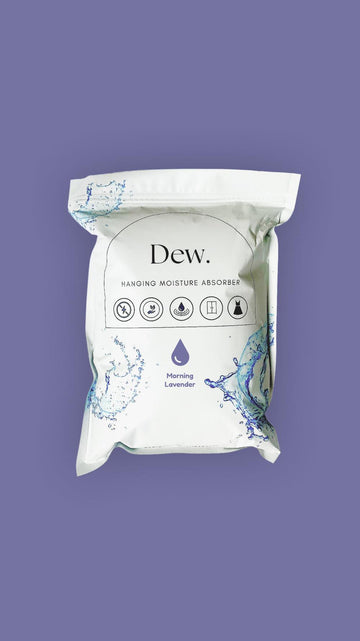
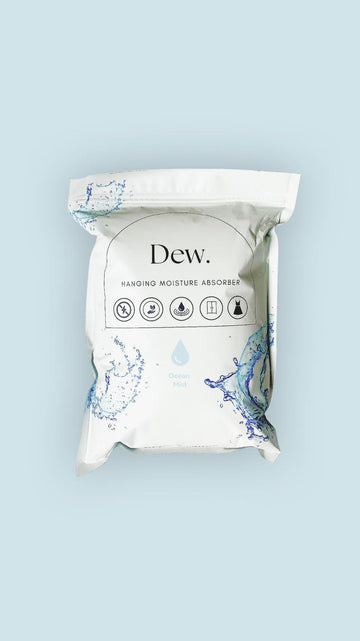
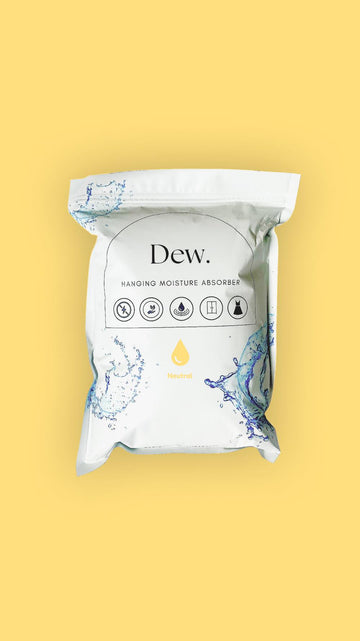
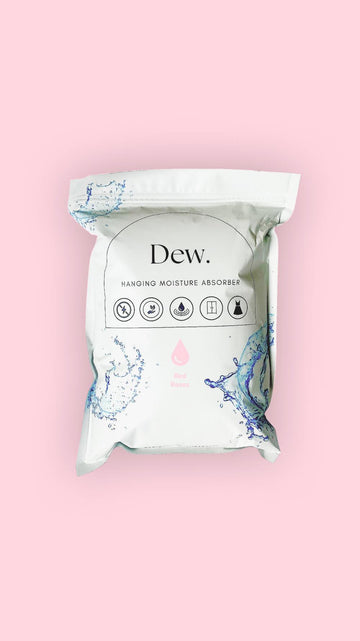
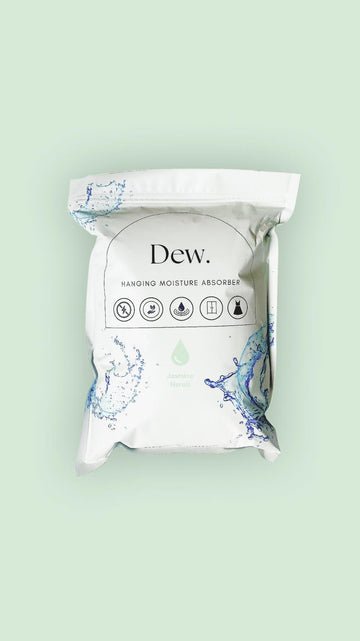
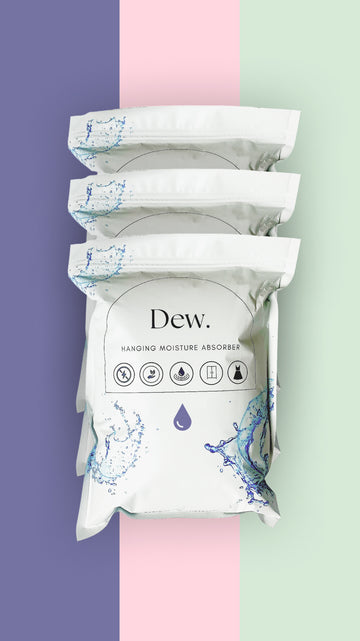
Hanging moisture absorbers like Dew. continuously pull excess moisture from the air. Place one in each wardrobe, plus drawers used for seasonal storage, suitcases in cupboards, and any sealed plastic tubs. A single absorber per cubic metre is a good rule of thumb. For a deeper comparison with other options, see moisture absorbers vs silica gel vs dehumidifiers.
4. Improve airflow
Open wardrobe doors for 30–60 minutes a day, especially after wet weather. Don't push clothes against the back wall — leave 2–3cm of breathing room. Avoid plastic garment bags except for short-term protection.
5. Be smart about where you put wardrobes
Wardrobes on external walls or walls shared with bathrooms are mould magnets. If you can't move the wardrobe, you can at least keep that wall clear with a small gap between the wardrobe and the wall.
What to do when you spot mould early
Small mould patches caught early can usually be treated at home. Our piece on the early signs of mould in a wardrobe covers what to watch for. The standard treatment approach:
- Take the item outside immediately to avoid spreading spores
- Brush off loose mould with a soft brush
- Soak in a white vinegar solution (one cup of vinegar per litre of water) for 30 minutes
- Wash on the hottest setting the fabric will tolerate
- Dry in direct sunlight — UV kills remaining spores
For leather, never wash. Wipe with a vinegar-dampened cloth, then dry slowly away from heat. Treat with a leather conditioner once fully dry to restore the natural oils stripped by the cleaning. Our guide to protecting leather bags from mould goes deeper on this.
Regional considerations
Mould risk in Australia varies dramatically by location:
- Far North Queensland and the Top End: Year-round protection needed; consider running a dehumidifier in wet season
- Sydney, Brisbane, Gold Coast: High risk from late spring through autumn, especially after La Niña years
- Melbourne and southern coastal areas: Moderate risk; worse in older homes and during winter when condensation builds up
- Perth, Adelaide, inland regions: Lower risk — see wardrobe moisture in Perth and Adelaide homes for local detail. Seasonal storage of summer/winter clothes can still develop mould.
Frequently asked questions
What humidity level prevents mould on clothes?
Below 60% relative humidity. Below 50% is even safer for long-term storage of leather goods and natural fibres.
Can mould grow on clothes in a sealed plastic container?
Yes — in fact, plastic containers can be worse than open wardrobes because any moisture sealed inside has nowhere to escape. Always make sure items are bone dry before storing in plastic, and consider adding a small moisture absorber.
Does air conditioning stop wardrobe mould?
It helps, because AC reduces overall room humidity, but it doesn't reach inside closed wardrobes. You still need targeted moisture control in enclosed spaces.
How long do hanging moisture absorbers last?
It depends on humidity. In tropical Australian conditions, expect around 45–60 days. In drier regions or during winter, they can last 90 days or more — our full breakdown is in how long do moisture absorbers last.
Mould is preventable. It just takes a bit of system — a hygrometer, fully dried clothes, moisture absorbers, and a touch of airflow — and you'll never deal with it again.


